
zoning

Markham Votes This Week, and the Fourplex Fight Is the Housing Question on the Ballot

Fourteen.  That is the number that has stayed with me through the whole fourplex argument.  Between the fall of 2022, when the province allowed three units on most residential lots, and last September, Markham's planning department received fourteen applications from homeowners who wanted to build the maximum on one property.  Four were approved.  In a city of roughly 375,000 people, that is the demand behind the "shantytown" speeches at the public meetings, and it is worth keeping in mind this week, with online voting already open and the final voting day set for Sunday, October 26.

The road to this ballot started in March 2024, when Markham signed a Housing Accelerator Fund agreement with Ottawa worth $58.8 million, tied to 1,640 fast-tracked homes over three years.  One of the seven commitments in the city's action plan was to permit four units as-of-right on lots zoned for detached, semi-detached and townhouse homes.  Since the province already allowed three, the change amounted to one more unit per lot, each with its own entrance, kitchen and bathroom (Government of Canada news release, March 12, 2024).
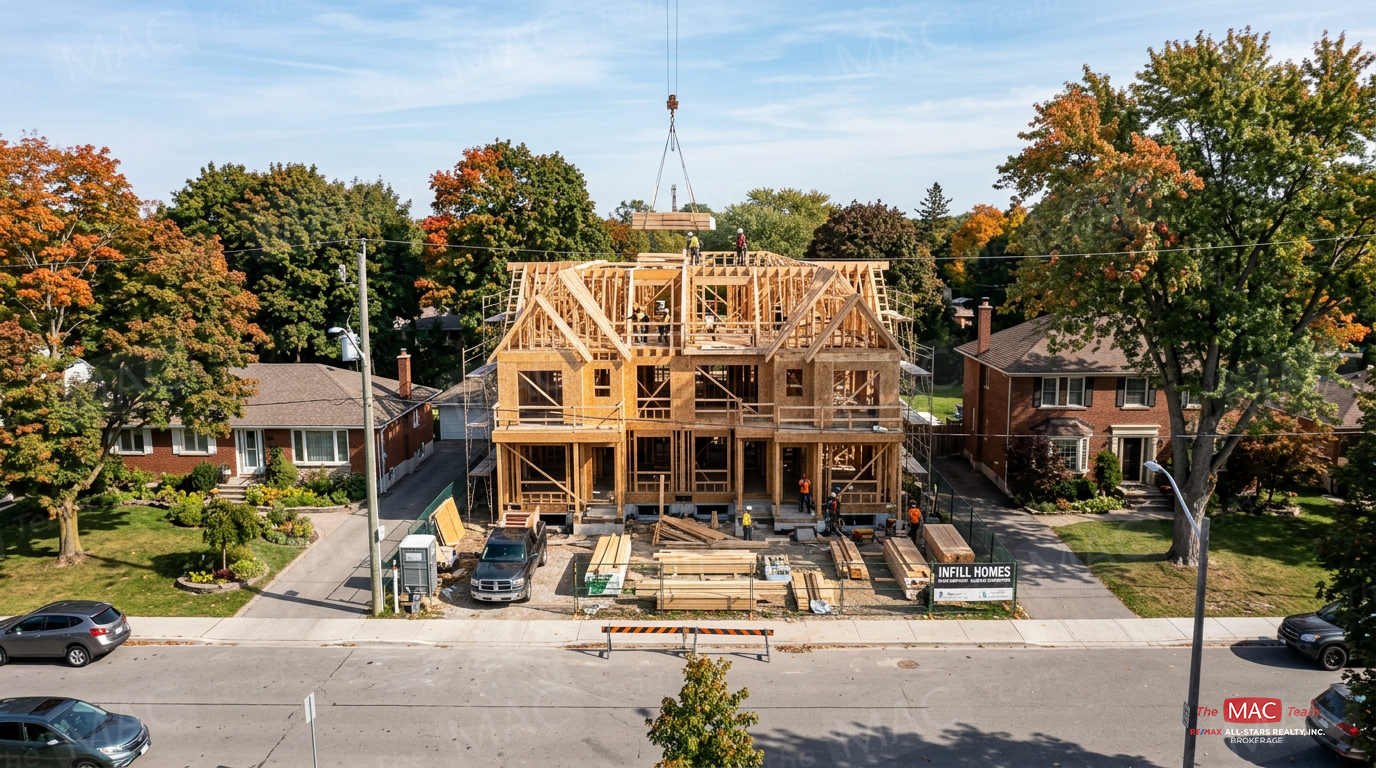
The bylaw then took most of a year to reach a vote.  Public meetings in September and October 2025 drew the familiar worries about parking, sewers and the look of the street, along with the mayor's remark that the city has "enough issues with pool cabanas and gazebos."  The item came off the October agenda, was deferred in November and again in December, and skipped January.  Council finally passed it 7 to 6 in late February 2026.  In March, Mayor Scarpitti used his strong mayor powers to revoke it, citing pressure on city services, transportation and parking, and noting that Markham already has more than 220,000 units in the planning pipeline.  In April the federal housing minister announced Markham would lose $7.36 million of its expected funding for missing the commitment, and said Ottawa expects the city to propose how it will make that up.

So where does that leave someone standing in the driveway of a sixty-foot lot on Wootten Way or a bungalow on an older Thornhill street?  Exactly where they were.  Three units remain legal across Ontario on most residential lots, so a basement apartment plus a garden suite behind a detached house is still within reach in Markham without a rezoning.  What the veto removed was the fourth unit, and judging by those fourteen applications, the people who would have built it could fit in my office.  I have walked a lot of wide lots with sellers over the years, and I tell all of them the same thing: the value in that lot comes from what a buyer believes they will be allowed to do with it, and a mayor who overrules his own council over one extra door tells buyers something about how the next application will be received.
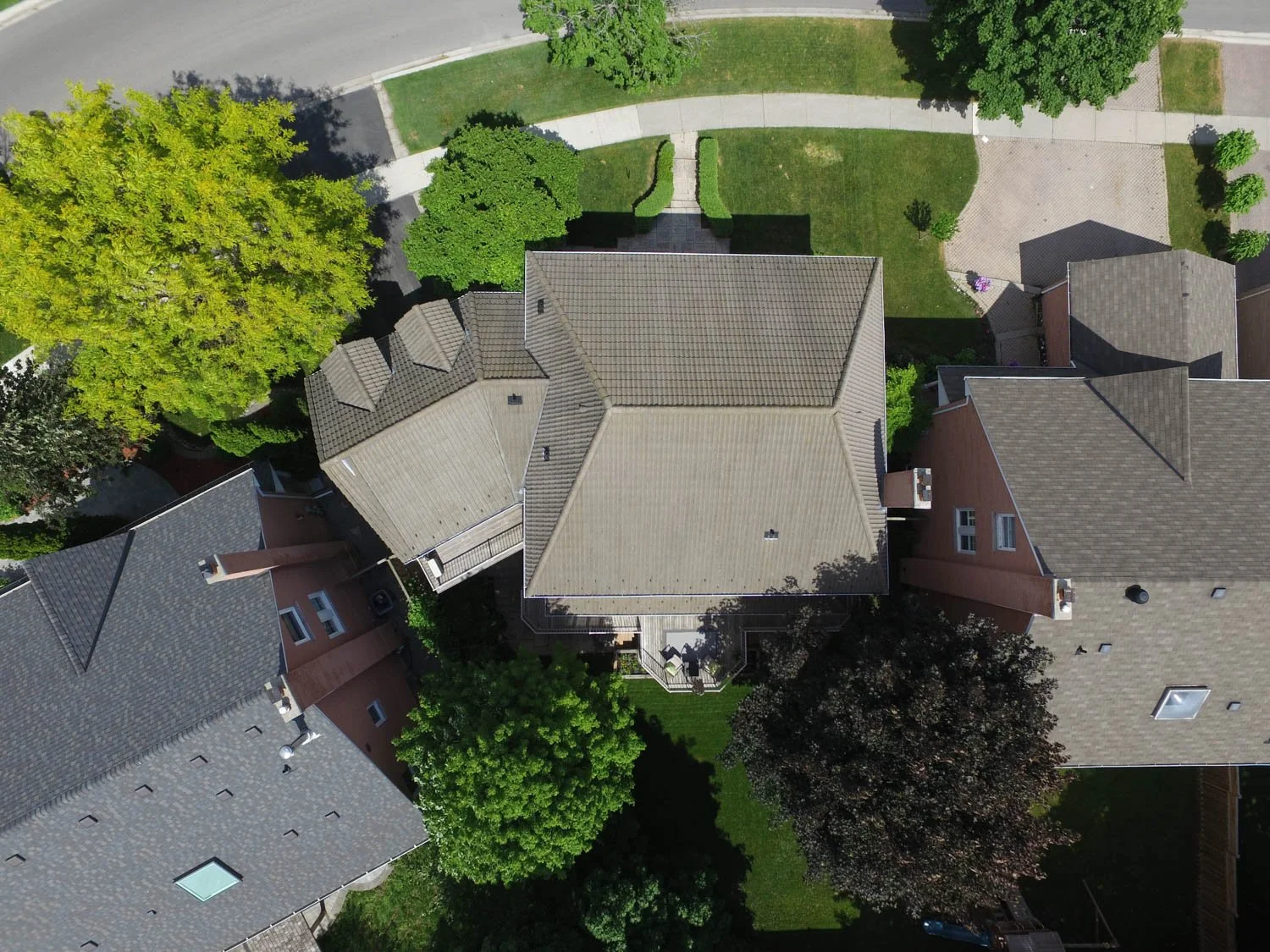
Large Unionville Lot Size Overhead

That is the part this election decides.  A 7 to 6 vote means a single seat changes the arithmetic, and several seats are open this time.  Ward 3 and Ward 6 have no incumbent running, Deputy Mayor Michael Chan's regional seat is open, and eleven people are competing for the four regional councillor positions (hello markham, October 15, 2026).  I am not going to tell you who to vote for.  I have clients on both sides of the fourplex question, and some of the most thoughtful people I know in Unionville are in the camp that wanted the veto.  What I will say is that the question deserves a plain answer from anyone asking for your vote, and most of the campaign material in my mailbox talks about traffic and "responsible growth" without saying what either one means for the lot next door.

If a candidate knocks this week, I would ask them this: would you vote to bring four units as-of-right back, and if not, how do you plan to recover the $7.36 million and protect the rest of the $58.8 million?  Their answer, either way, tells you how your street is likely to look in ten years, and whether Ottawa helps pay for the roads and pipes that everyone at those public meetings said they were worried about.

A word on the day-to-day as well, because the election will come and go and the listings will not.  The province's three-unit rule is not going anywhere, buyers of deep lots have been paying a premium for the garden suite option for two years now, and the pre-2024 zoning shown on a lot of older listings is stale either way, something I wrote about in August.  If you are selling a property with a deep lot in Markham Village, Thornhill or on the older streets of Unionville, the honest pitch is three units, documented and drawn, rather than a fourth that may or may not return after October 26.

Online voting runs through October 26, in-person voting is October 23 to 26, and your voter information letter should have arrived earlier this month (City of Markham).  Vote with your house in mind.
The Zoning on That Listing May Be Out of Date - What's Changing Across York Region

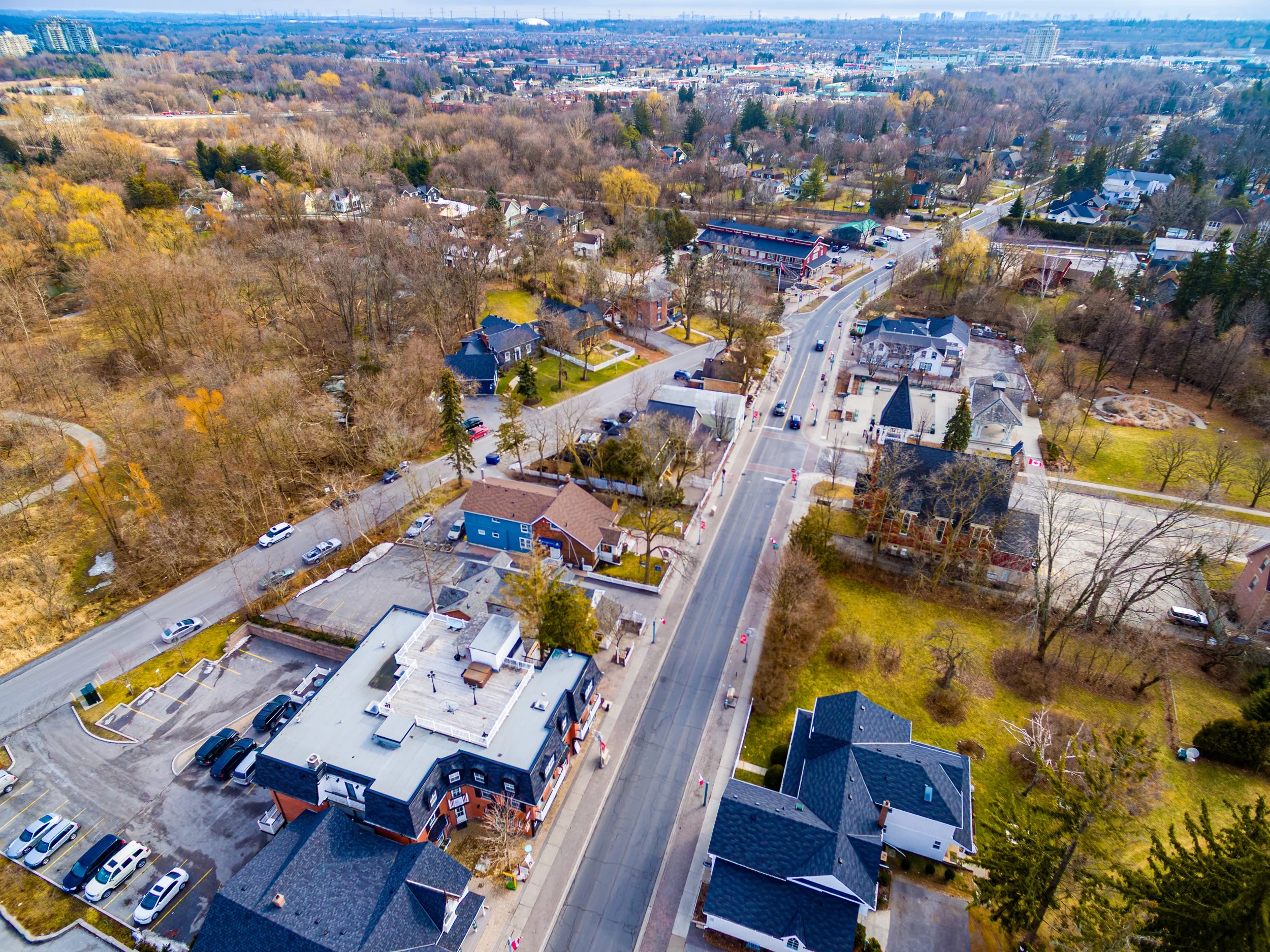
Aerial View of Unionville Main Street

Aerial view of Main Street Unionville © Brad Macdonald

If you are buying a property in York Region for what you plan to do with it, whether that is a second unit for family, a workshop, or a future severance, confirm the zoning with the municipality itself before your conditions come off.  Three municipalities here have rewritten or are rewriting their zoning by-laws at more or less the same time, and the property databases that agents and lawyers pull from have not all kept pace.  The acreage on the deed does not change; what you are permitted to build on it can.

Markham's rewrite is already finished

Council enacted a new comprehensive zoning by-law, By-law 2024-19, on January 31, 2024, and the Ontario Land Tribunal approved it on a city-wide basis on September 19, 2024, save for lands tied to remaining site-specific appeals (source: yourvoicemarkham.ca).  What it replaced is remarkable when you see it written down: forty-six separate parent zoning by-laws, enacted between 1954 and 2004, each with its own definitions and standards.  For most Markham homeowners this was overdue housekeeping and nothing more.  But if you are working from an older listing, an older survey, or a report prepared before 2024, the zoning it names may simply no longer exist, and a small number of properties do still sit under the older rules. Some of the biggest changes occur to the commercial/industrial zoning around Markham’s inclusive industrial zone just east of McCowan road, by CF Markville, with the official plan designating some of this for ‘future redevelopment’ with very different zoning.

Georgina is partway through, and rural buyers should care most

Georgina's Countryside lands, meaning the rural and agricultural areas outside the settlement boundaries, now fall under Countryside Zoning By-law 600, while Keswick, Sutton, Jackson's Point, Pefferlaw and the hamlets remain under the older By-law 500.  Phase two, which updates the settlement areas, began in 2025 and is expected to conclude in 2027 (source: Town of Georgina, Zoning By-law Update).  For anyone shopping in cottage country the practical consequence is significant.  A large rural parcel that once appeared simply as rural may now carry a combination of designations, with Environmental Protection applied to a portion of it.  The land has not shrunk by a square foot, but where you may build, whether an additional dwelling unit is permitted, and what a severance might realistically look like can all have changed.

Stouffville is next

Whitchurch-Stouffville still operates under Comprehensive Zoning By-law 2010-001-ZO, consolidated as recently as July of this year, while its ReZone and ReDesign project works toward an updated by-law and new urban design guidelines (source: townofws.ca).  Nothing has flipped yet, which makes this the right moment for anyone with plans for a Stouffville property to pay attention rather than to assume.

The part almost nobody checks

The property information services that agents and lawyers pull from, and the assessment records behind them, do not always reflect these transitions right away.  You can look a property up in perfectly good faith and be handed a zoning designation that was superseded a year or more ago.  Nobody is being careless about it.  Municipal by-laws simply change faster than the databases that describe them, and there is no flag on the screen telling you that what you are reading is out of date.

So before zoning becomes the reason you are buying a property, confirm it at the source: the municipality's own current zoning map and by-law schedules, not a listing sheet, not an old report, and not the property's historical use.  Look specifically for whether the parcel carries more than one designation, and for site-specific exceptions, which are common and easy to miss.  If your plan depends on the answer, a call to the municipal planning department before the conditions come off is the cheapest insurance you will ever buy, and if the answer is still unclear, that is exactly what a properly drafted condition in your offer is for.

Always Confirm Zoning

Zoning across York Region is in transition, and the record you look up may not be the record that governs the property.  Confirm the current zoning with the municipality before you waive conditions on anything you are buying for its development potential, and treat rural and large-lot parcels as the highest risk.  Over the years I have found that the expensive surprises are almost never about price; they are about what someone assumed they could do with a property and then could not.

If you are considering a rural or large-lot purchase anywhere in York Region this fall and want a second set of eyes on it before you commit, call me.  I would far rather spend an afternoon on this with you than help you unwind it later.