
Three weeks ago I wrote that the foreign buyer ban was due to expire on January 1 and that, if it were up to me, Ottawa would let non-residents buy new construction and keep resale homes for the people who live here. Thursday's federal budget landed very close to that. The ban on non-Canadians buying existing homes is to be extended for two more years, to January 1, 2029, and newly built homes are to be exempted from it. The budget runs to a deficit of about $62 billion and touches a great deal that has nothing to do with houses, but four housing items in it are worth your time, and the ban is the smallest of them.
The Ban Stays for Resale Homes
For anyone selling a resale house in Markham, or anywhere else in Ontario, the extension changes nothing, because Ontario's 25% Non-Resident Speculation Tax (NRST) was always the larger barrier and it stays in place regardless of what Ottawa does. The exemption for new homes is the part worth watching. The budget does not yet say what counts as new, or whether a pre-construction contract signed before the building exists would qualify, and the government says the legislation and regulations will follow shortly. If the definition turns out to be generous, the stalled condo projects around Markham Centre and along Highway 7 would get a new pool of buyers for the units they must sell before a lender will fund the build, and I would expect Queen's Park to come under some pressure to carve new construction out of its own 25% tax, though not quickly.
Financing for Triplexes and Fourplexes
The item I think matters most locally is the one most of the coverage skipped. Starting February 1, 2027, a newly built three or four-unit home can be financed with an insured construction loan of up to 90% of its value, with no maximum property value and no requirement that the owner live in one of the units, and once it is built the owner can keep all the units as rentals with a 30-year insured mortgage. Under today's rules a $3 million fourplex does not qualify for mortgage insurance at all, because it sits above the $1.5 million ceiling and the owner would have to move in. Private insurers will also be allowed to insure buildings of five to fifty units, which until now has been CMHC's territory alone. Markham allows three units on most residential lots, and council's fight over a fourth is well known, but a garden suite behind a basement apartment on a sixty-foot lot in Markham Village is the kind of small project this rule is written for, and cheaper insured construction money changes what a builder can pay for that lot.
The $1.5 Million Line and 30-Year Mortgages
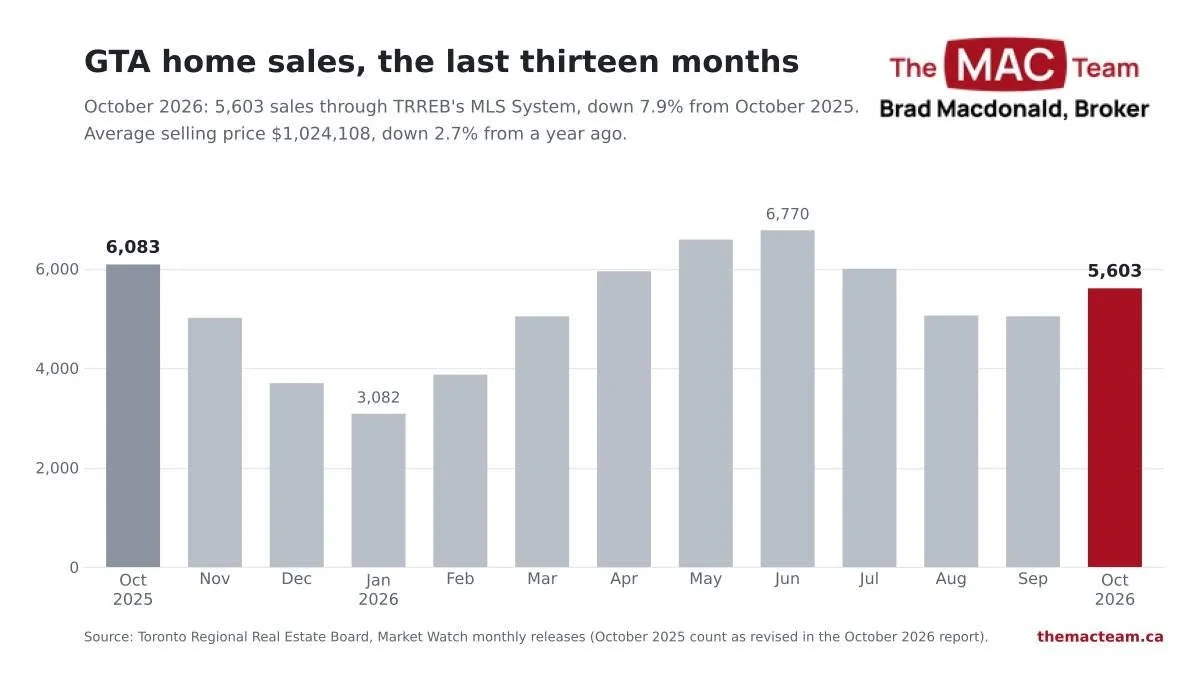
In December 2024 Ottawa raised the price ceiling for insured mortgages with less than 20% down to $1.5 million. The budget now proposes the same $1.5 million ceiling for the optional insurance that lenders buy on conventional mortgages, and it would allow 30-year amortizations on those insured loans where at least one borrower is a first-time buyer or the home is newly built. That reads like plumbing, and mostly it is, but the plumbing matters in a city where the average detached house sold for $1,522,789 in October. Lenders can fund an insured mortgage more cheaply than an uninsured one, so more of the mortgages written on houses here would become eligible for the better pricing, and a first-time buyer stretching for a new townhouse in Cornell would get a 30-year schedule even with a healthy down payment. Alongside it, the Canada Revenue Agency is to verify applicants' income directly for lenders, with a pilot in 2027, which anyone who has sat across the table from a buyer with a creative employment letter will welcome (this will be the most interesting process change!).
Build Canada Homes
The biggest dollar figure is $13 billion more for Build Canada Homes, which takes the new federal housing agency to $45 billion and a target of 200,000 homes over ten years, with non-market housing starts to triple to 24,000 a year. Add $11.2 billion over four years toward ending homelessness within a decade, and a ten-year renewal of the Canada Housing Benefit for renters. The Canadian Real Estate Association's response was that it could not yet see a path to ownership for middle income buyers in any of this, and on that I agree with them. None of these homes will be for sale in Berczy or Wismer, and the budget's own numbers describe a government that has decided the private market will look after the people who can buy at today's prices while it builds for the people who cannot.
If I had to sum it up for a client, I would say this budget leaves the resale market alone, puts real money behind rental and non-market supply, and quietly makes small multi-unit buildings easier to finance from February on. The rest belongs to 2027 and beyond, most of it still has to pass the House, and I will update the October post on the ban once the regulations say what counts as a new home.