
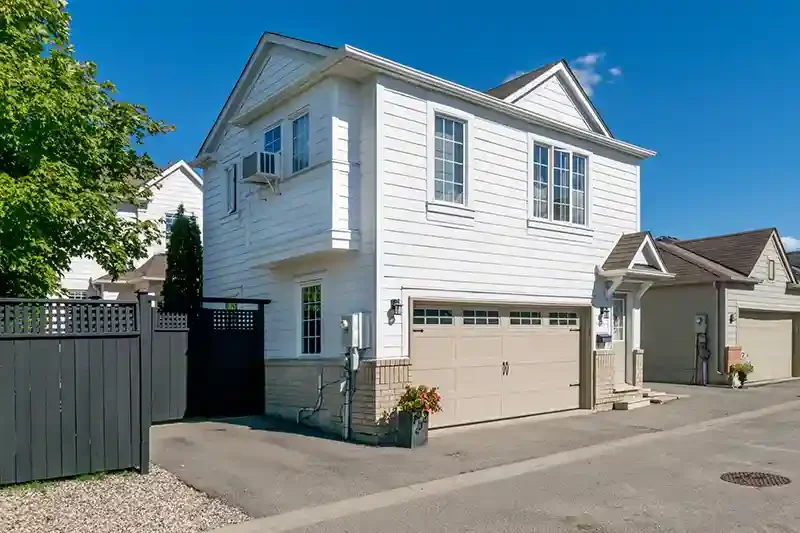
Typical Laneway Garage (and coach house) Cornell
Show a buyer from Toronto three houses in Cornell and somewhere around the second one they ask where the garages went. The answer is that they are out back, off a rear lane, exactly where the neighbourhood's planners put them in 1994. Cornell is the rare suburb that was designed as an argument, and after a lot of years showing homes there I can tell you the argument mostly worked. If you are weighing a purchase or a sale in the east end of Markham, it helps to understand what this neighbourhood was trying to do, because it still shapes prices, showings and the way a home here needs to be marketed.
A suburb built to prove a point
In the early 1990s, Markham hired Duany Plater-Zyberk, the Miami planning firm behind Seaside, Florida, to lay out a community that pushed back against the standard subdivision. The plan they delivered in 1994 called for a tight grid of streets instead of curving crescents, houses pulled close to the sidewalk with real front porches, and garages moved to rear lanes (City of Markham; the planning history is well documented if you ever want to go down that rabbit hole). Building started in 1997, and the neighbourhood has been filling in ever since, from the original streets around Bur Oak Avenue out to the newer Cornell Rouge phases near the Little Rouge Creek. Roughly speaking, it runs from 16th Avenue down to Highway 407, between Ninth Line and the Donald Cousens Parkway.
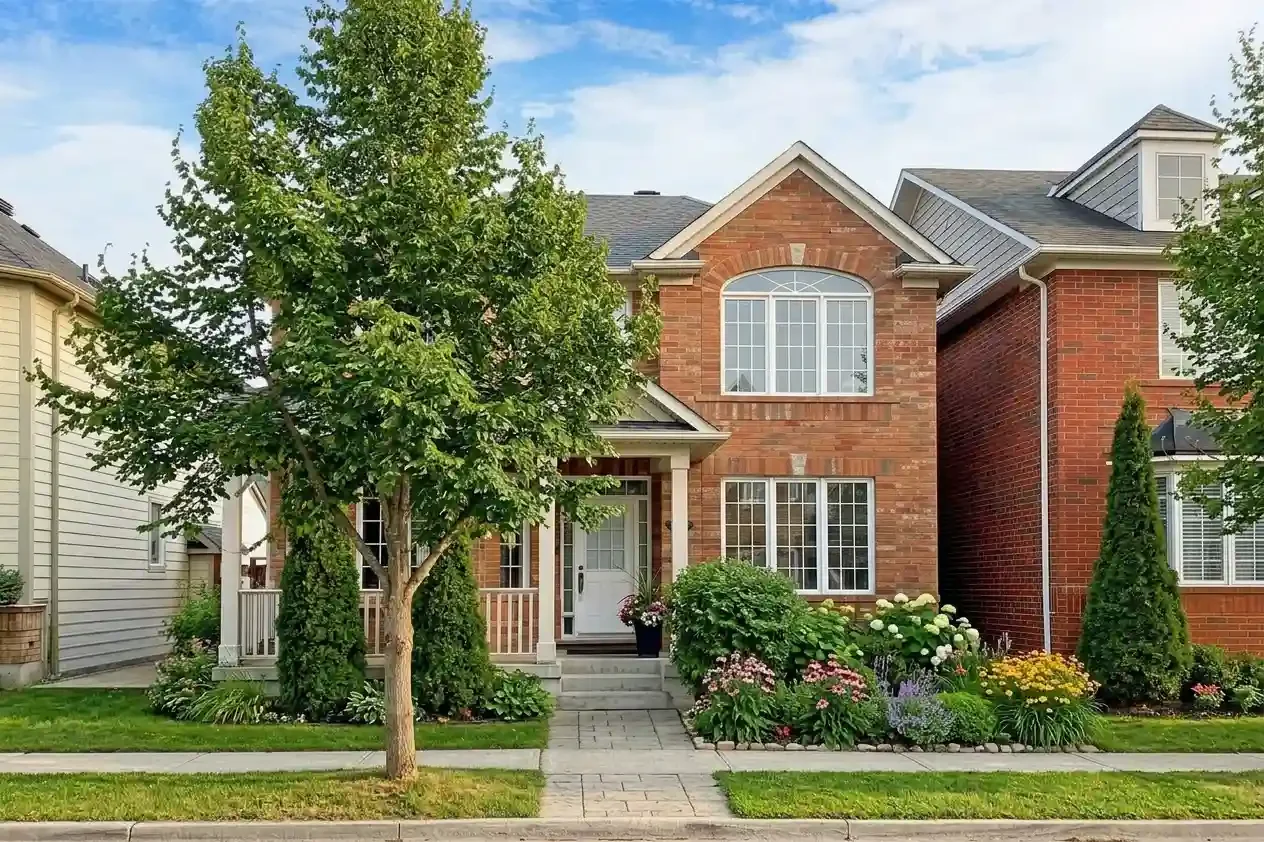
The porches are not decoration. On the older streets people actually sit on them, and a street where the front of every house is a porch rather than a double garage door photographs better and feels different to walk. Kids can bike on a connected grid instead of a dead-end crescent. And the practical anchors are unusually strong for a suburb: Markham Stouffville Hospital sits on Church Street at the neighbourhood's edge, the Cornell Community Centre holds the library and the pool, and the Cornell bus terminal runs Viva and GO routes plus an express bus to Finch station. The buyer pool reflects all of that - young families, hospital staff who want a short trip to a shift, downsizers who want a house without a driveway to shovel, and a steady trickle of Toronto buyers who recognize the streetscape from neighbourhoods they could no longer afford.
What to look at before you offer
Buying here has a few wrinkles the listing sheet will not mention. Walk the lane as well as the street. Lanes are shared space; some are beautifully kept and some are tired, and your garage lives on one, so ask how snow clearing works back there and who looks after it. Some blocks carry live-work zoning and a few homes have coach-house space over the garage, which can be a real bonus, but have your lawyer confirm what the zoning actually permits before you count on the income. And notice that Cornell is townhouse-heavy compared with Berczy or Wismer, which is part of why the entry price sits lower than in those school-driven neighbourhoods to the west. You are trading lot size for streetscape and services, and it is a fine trade as long as you make it with your eyes open.
Selling a Cornell home is its own craft
If it were my listing, the first photo would be the porch and the tree-lined street, never the lane, and the showing route would bring buyers in through the front door, because the front is the argument. Price against Cornell sales, too. An agent who prices a laneway townhome off Wismer comparables will miss, because the built forms are different enough that the comparables have to come from inside the neighbourhood. For the wider backdrop, my September 9 post on the August TRREB numbers covers where Markham sits this fall (TRREB Market Watch, August 2026).
One more thing worth watching if you own here. South Cornell has been in redevelopment planning since 2022, and the proposals include mixed-use buildings up to 13 storeys (City of Markham development applications). Some owners will read that as the main street Cornell was always promised, others as density landing close to home. It will come up at the door this election season, and it is exactly the kind of zoning question worth putting to your ward candidates in October.
Cornell was a bet that people would pay for streets built around porches instead of parking, and the resale market has spent nearly three decades proving the bet right more often than wrong. If you are weighing it against Berczy, Wismer or one of the newer phases out east, I am glad to walk a few of those lanes with you. It is a neighbourhood that makes more sense on foot than on paper.