
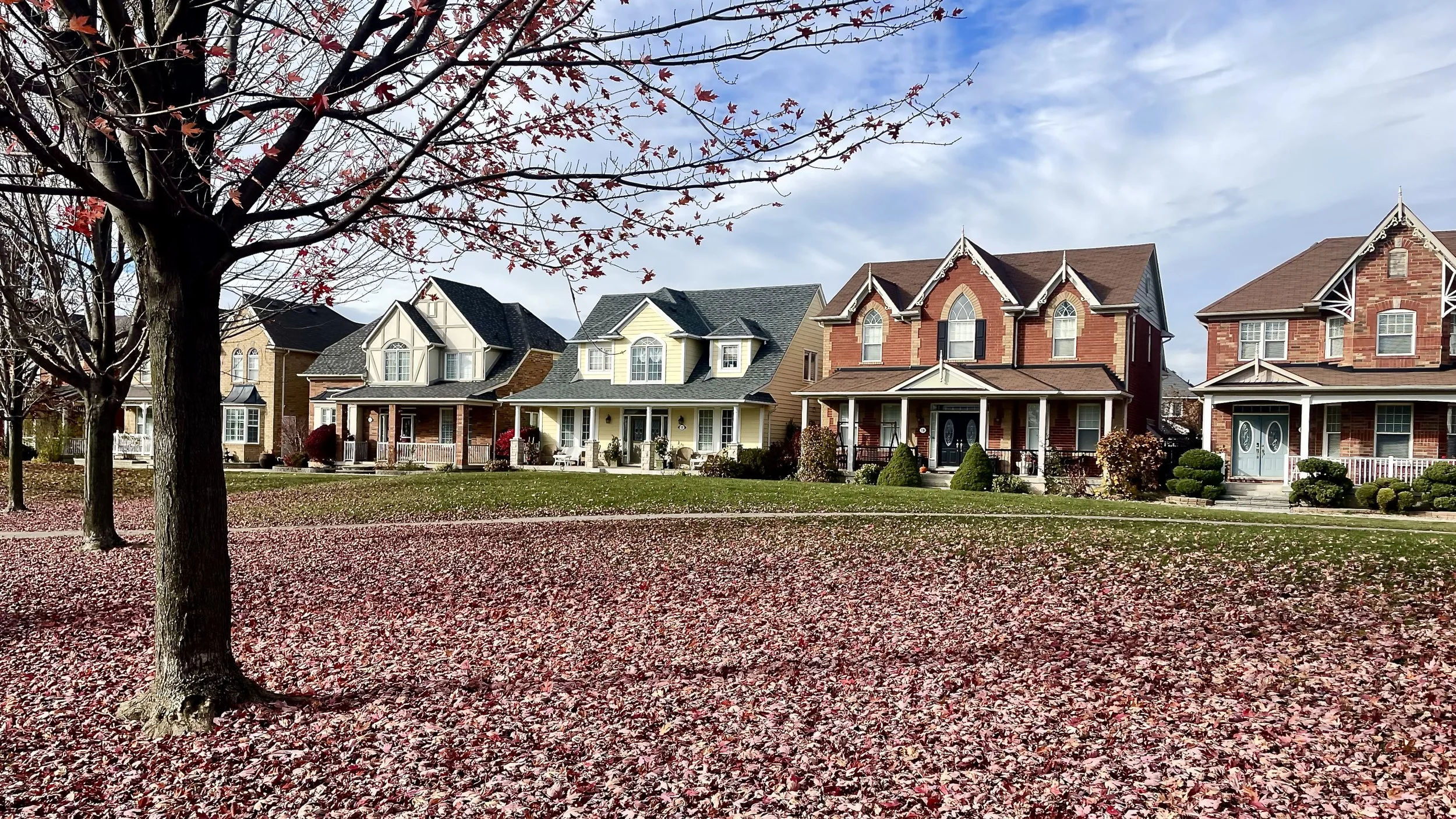
Cornell, Markham
Your guide to Cornell
By Brad Macdonald, Broker, The MAC Team, REMAX All-Stars Realty Inc., Brokerage. Updated November 2026.
Cornell is the master-planned community on the east side of Markham, laid out in the 1990s around front porches, rear laneways, coach houses and a park within a short walk of almost every home. Its first residents arrived in 1998, and with about 7,500 homes across six neighbourhoods it is larger than many people realize, with new homes still being added at its south end and along Highway 7. This page covers Cornell's origins, its neighbourhoods and housing types, its coach houses, the plans for Cornell Centre, and the schools, parks and transit that serve the community.
Cornell at a glance: east Markham, Ward 5 · east of Ninth Line, from Donald Cousens Parkway in the north to Highway 407 in the south, with Rouge National Urban Park to the east · planned by Duany Plater-Zyberk after a 1992 provincial design competition · first residents in 1998 · about 7,500 homes · Cornell Village, Upper Cornell, Cornell Rouge, Grand Cornell, Cornell Centre and South Cornell
Welcome to Cornell
Cornell sits on the eastern edge of Markham's urban area, east of Ninth Line, with Highway 407 along its southern edge and Donald Cousens Parkway curving around its northern and eastern sides. 16th Avenue and Highway 7 run through the community rather than around it, and beyond its eastern edge lie Rouge National Urban Park and the Greenbelt countryside. Markham Stouffville Hospital, the Cornell Community Centre and Library and the Cornell Bus Terminal are grouped together at its centre on Highway 7.
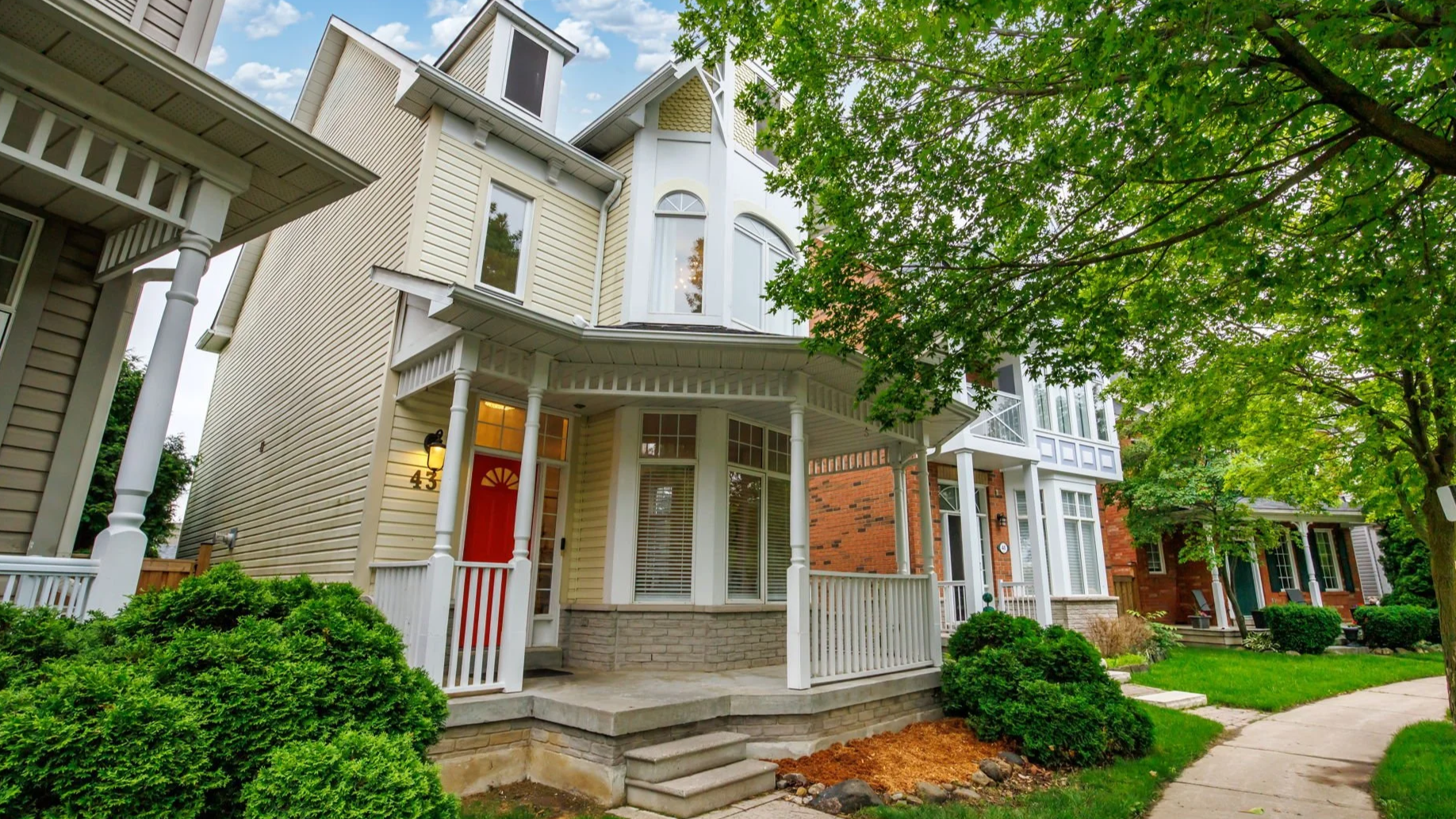
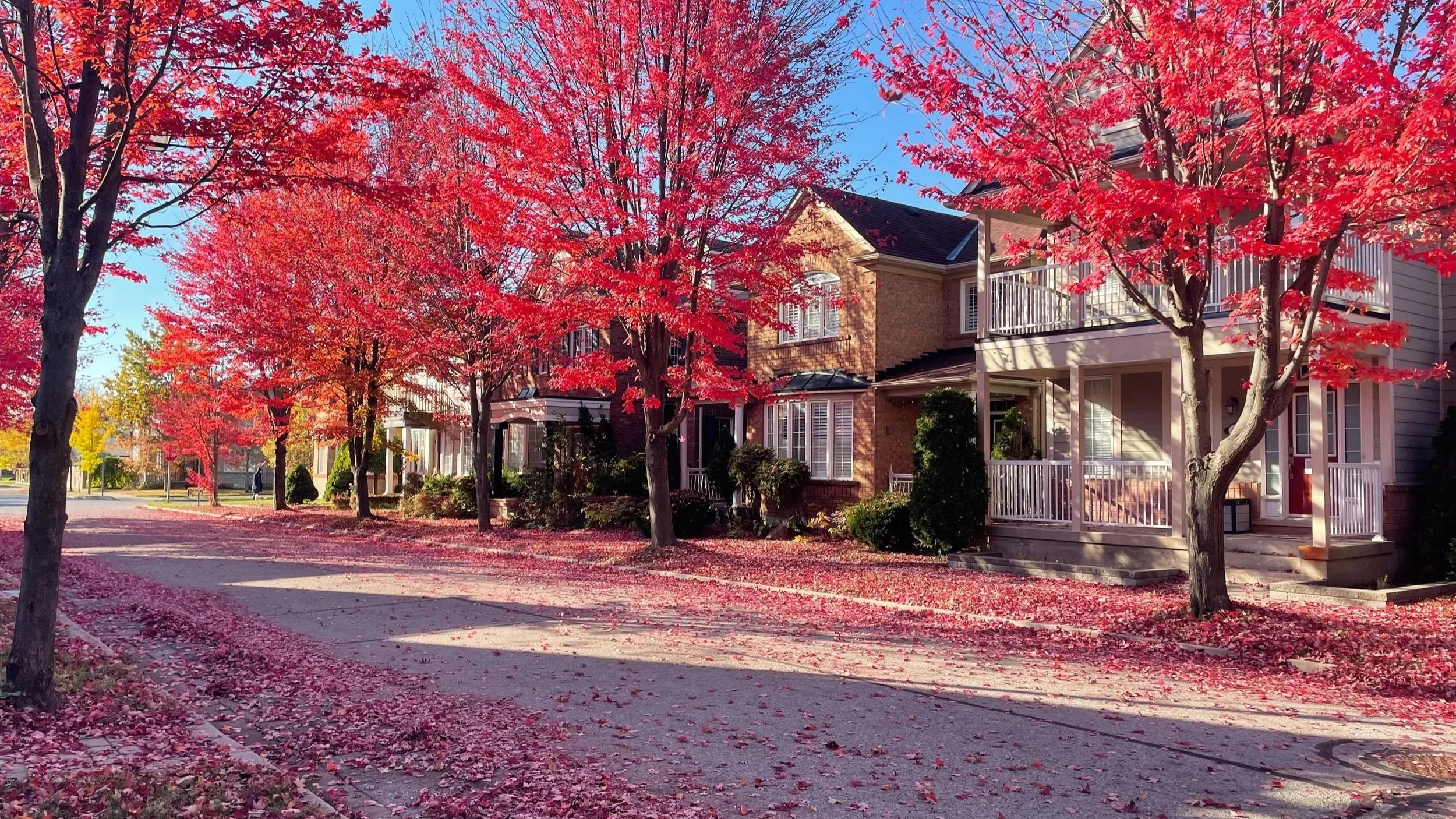
What sets Cornell apart is visible from the sidewalk. Nearly every home has a front porch set close to the street, garages are reached from laneways behind the houses so that the fronts are free of driveways and garage doors, and small parks and parkettes are woven through every neighbourhood, many of them with homes facing directly onto the green. A great many houses also have a coach house above the garage, a self-contained suite that the original plan made room for and that remains one of the community's defining features. The closer, more urban layout brings neighbours into regular contact, and on a warm evening the streets are busy with children, cyclists and people out walking their dogs.
The Cornell Residents Association champions many of the neighbourhood's traditions, among them the skating rink that neighbours run at the Cornell Mews each winter, the Christmas tree lighting at the Mews during the holidays, and a community-wide garage sale that is typically held on the first Saturday of June. Several active local Facebook groups, the largest with thousands of members, keep residents in touch between events.
For anyone searching listings, Cornell is a community name on the Toronto Regional Real Estate Board, but its six neighbourhood names are not. A home in Cornell Rouge or South Cornell is listed simply under Cornell, so the neighbourhood is usually identified only in the listing remarks.
Origins of the Neighbourhood
Long before it was a planned community, Cornell was farmland. Christian Reesor, who came to Markham from Pennsylvania in 1804, bought the 200 acres of Lot 10, Concession 9 the following year, and five generations of the Reesor family farmed the land that is now the southern part of Cornell Centre. Two of the family's farmhouses, one built in 1875 and the other around 1922, were later moved onto streets in South Cornell, where they still stand among the newer homes.
In 1973 the Province expropriated a large part of east Markham for a planned second Toronto airport at Pickering and a new community beside it. The airport was never built, and by the late 1980s a parcel of provincially owned land in east Markham had been left out of the airport plans as surplus. The Province and the Town of Markham agreed to plan it as a demonstration community, and in 1992 the Province held a design competition for the land, which was won by Duany Plater-Zyberk and Associates of Miami, one of the firms that founded the New Urbanism movement.
Their plan organized Cornell into neighbourhoods sized for a five-minute walk to a neighbourhood centre, linked by Bur Oak Avenue as a main street and by corridors of open space. Markham adopted it in 1994, and the secondary plan formally defined the coach house, making Cornell's laneway suites some of the first laneway housing in Ontario. Architectural guidelines published in 1997 set the character of the homes, drawing on the building traditions of Markham and the GTA rather than on distant styles, and construction began that year. The first residents of Cornell Village moved in during 1998 and 1999.
The community was then built out by a succession of developers. Law Development Group, which had bought much of the land from the Province, built the first phases before stopping construction around 2001 with roughly 1,100 homes complete, and a new group of owners, the Cornell Developers Group, carried the plan forward from 2003. Builders including Mattamy, Madison Group, which began Cornell Rouge in 2005, and Lindvest, which developed Grand Cornell and South Cornell, completed the neighbourhoods that followed. A parks agreement approved in 2006 secured about 202 acres of parkland, woodlot and greenway, well above the standard requirement, and the plan updated in 2008 introduced a corridor of taller, mixed-use buildings along Highway 7 that the original plan did not include. Cornell's design has been recognized repeatedly at Markham's Design Excellence Awards, including for the live-work units on Bur Oak Avenue in 2006, the Grand Cornell neighbourhood in 2010 and the Cornell Community Centre and Library in 2014.
The Neighbourhoods of Cornell
Cornell grew one phase at a time, and its six neighbourhoods carry the names their builders gave them. None has an official boundary, but residents use the names every day, and they are a reliable guide to the age and character of the homes in each part of the community.
| Neighbourhood | Where | Character |
|---|---|---|
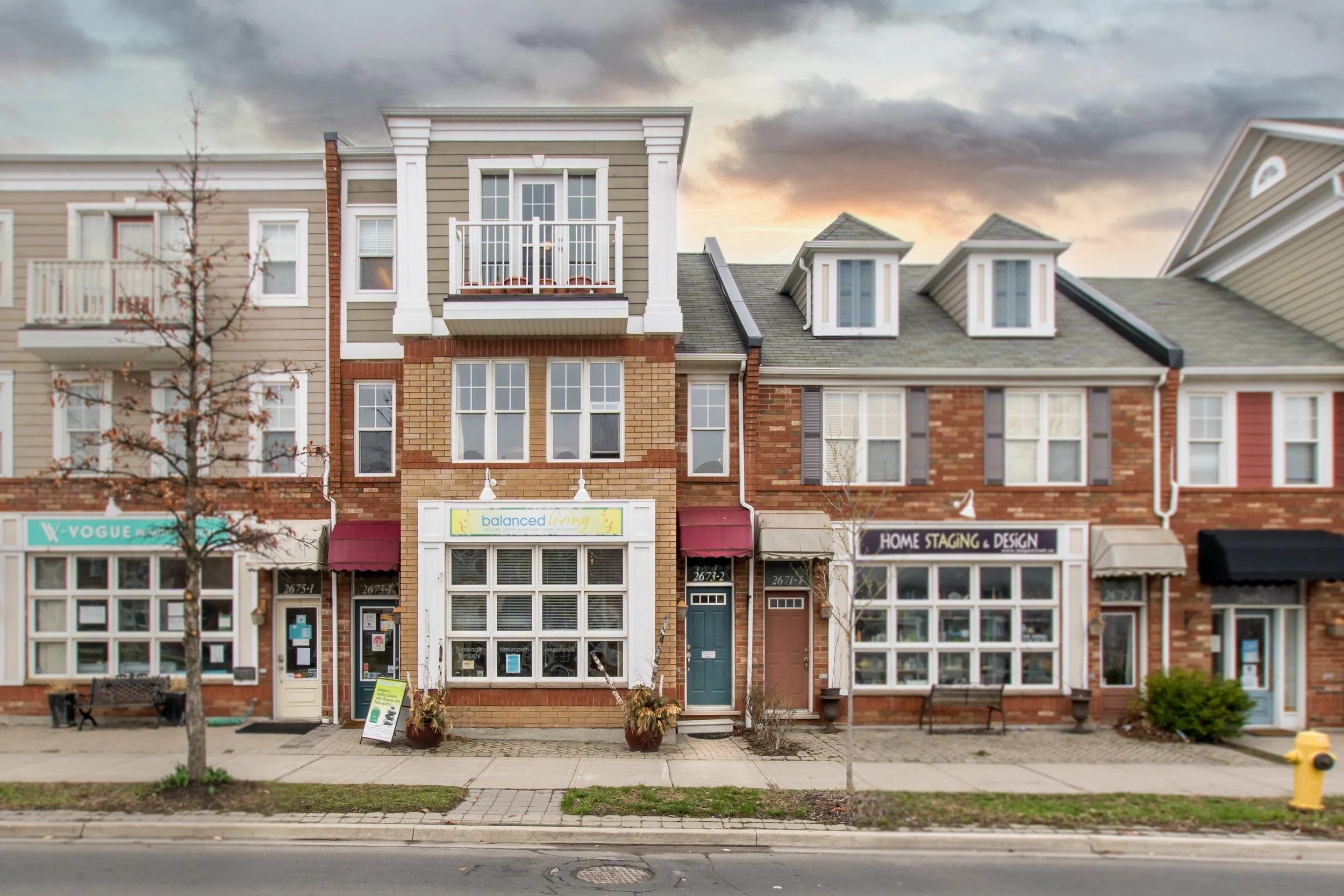
| Cornell Village | Highway 7 to 16th Avenue, around Bur Oak Avenue and the Mews | The original neighbourhood, first occupied in 1998, with the Mews and the live-work units on Bur Oak Avenue |
| Upper Cornell | Around and north of 16th Avenue | The north end of the community, home to Little Rouge Public School |
| Cornell Rouge | 16th Avenue to Highway 7, east of Cornell Centre Boulevard to the edge of the Rouge | Madison Group's community of more than 2,000 homes, first occupied in 2006, with a coach house or loft on most detached homes |
| Grand Cornell | South of Highway 7 and west of Bur Oak Avenue, around Stoney Stanton Road and Blanche Lane | The original, westerly part of South Cornell, first occupied in 2006, beside Grand Cornell Park |
| Cornell Centre | Along Highway 7, from Ninth Line to Reesor Road | The hospital, the community centre and library, the bus terminal and the approved high-rise projects |
| South Cornell | Highway 7 to Highway 407, from Ninth Line to Donald Cousens Parkway | Grand Cornell on the west side, with newer homes by CountryWide Homes and Lindvest to the east of Bur Oak Avenue |
Cornell Village is where the community began, and its streets around Bur Oak Avenue show the original plan most completely, with porches facing small greens, laneways behind and the Mews as the neighbourhood's gathering place. The award-winning live-work units on Bur Oak Avenue, with a shop or office at street level and the home above, are here as well. Upper Cornell extends the same pattern north toward 16th Avenue and beyond it.
Cornell Rouge, on the east side of the community, was built by Madison Group with Forest Hill Homes from 2005, and most of its detached homes were offered with a coach house or loft. In its north-east corner, along Sam Priestley Avenue and Webb Street and facing Donald Cousens Parkway, the homes have a more modern style than anywhere else in Cornell. The more recent building is along Rustle Woods Avenue, where many of the newer homes are semi-detached homes and townhomes and more townhomes are under way near Donald Cousens Parkway, so Cornell Rouge is a good place to look for either, while its original streets have plenty of detached homes.
South Cornell is the strip between Highway 7 and Highway 407. Its first families moved into Grand Cornell, on the west side beside Grand Cornell Park, in 2006, and the land east of Bur Oak Avenue has been built out since 2024 by CountryWide Homes and Lindvest, with the newest homes, from 2025 and 2026, in its most easterly sections. The later phases adjusted the original plan to what buyers asked for, with somewhat larger homes, more wide lots and more coach house options, and a site on Bur Oak Avenue has been set aside for a future public school.
Cornell Housing Types
With about 7,500 homes, Cornell offers a broader mix of housing than most of Markham. When the first phases were studied in 2004, more than 40 percent of Cornell's homes were townhouses, compared with about 11 percent across Markham, and the later phases have continued that variety. Today the community takes in detached and semi-detached homes, freehold and stacked townhomes, condominium apartments, live-work units and a smaller number of bungalows and bungalofts, with more condominium apartments planned along Highway 7.
Nearly every home, whatever its type, follows the Cornell pattern of a porch on the street and a detached garage on the laneway, and a great many have a coach house above that garage. The homes of the original neighbourhood follow the 1997 architectural guidelines, with traditional elevations and detailing drawn from Markham's older streets, while the later phases offer larger plans and wider lots alongside the townhomes, and the north-east corner of Cornell Rouge adds a more modern look.
For buyers and sellers, the details that matter most in Cornell are the type of home and the phase it belongs to, whether it has a coach house or room to add one, the width of the lot, and whether it fronts onto one of the community's parks or parkettes. Two homes of similar size can differ considerably in value on these points, and establishing them is the first thing we do when we assess a Cornell home.
The MAC Team
Coach Houses in Cornell
The coach house has been part of Cornell since its original plan, which defined it as a self-contained dwelling separate from the main house and reached from the laneway. In practice it is a suite built above a double or triple detached garage, with either an interior or an exterior stairway, and coach houses in Cornell range from one to three bedrooms. Owners use them as income properties or as space for extended family, and the later phases, Cornell Rouge in particular, offered them far more widely than the original neighbourhood did.
Owners whose home was built without one can often add a coach house over the detached garage. Some properties lack the parking or setbacks the City requires, but on many lots the addition is close to a standard job, since several local construction companies specialize in the work and the City's requirements are well established.
A coach house changes both how a home can be used and how it is valued, and it needs to be presented properly to the buyers who are looking for one. We have listed and sold coach house properties in Cornell, and we can tell you which homes already have one, which have room for one and how an existing suite bears on value. More detail, with photographs of a Cornell coach house, is on our community site at https://cornellmarkham.ca.
Living in Cornell
Green space is one of Cornell's greatest strengths. The community has more than 50 named parks and parkettes, about two dozen playgrounds, woodlots and ponds, and Cornell Community Park, which opened in 2023, offers everything from water play and a toboggan hill to eight pickleball courts. Rouge National Urban Park lies just to the east, and the community centre, the hospital and public and Catholic schools from kindergarten through high school are all close at hand.
Laneway living has its own routines. Most homes have a garage and a parking pad on the laneway, the City clears the laneways after the main roads in winter, and overnight parking on many streets requires a seasonal City permit, of which only a limited number are available. Cornell has no supermarket of its own, so groceries and everyday shopping mean a short drive south to Box Grove. The shops along Bur Oak Avenue are also fewer than the original plan intended, and in November 2026 Council changed the rules to allow shops and other businesses on parts of the avenue again.
Cornell is also growing. New homes are still going up in South Cornell, and the approved projects along Highway 7 will bring many thousands of new residents over the coming years, so buyers should expect construction activity and busier roads in that corridor as Cornell Centre fills in.
Cornell Centre and Highway 7
The next chapter of Cornell is taking shape along Highway 7. Cornell Centre, the land on both sides of the highway from Ninth Line to Reesor Road, is planned at a much higher density than the rest of the community, with condominium buildings of varying heights, shops and services at street level and a health care campus around the hospital. The City's new Cornell Centre Secondary Plan is still a draft, dated January 2025, with heights of up to 32 storeys stepping down toward the existing homes, and it had not been adopted as of November 2026.
Council approved four projects in Cornell Centre between December 2023 and July 2024, which together provide for more than 6,000 new homes. An approval sets the permitted height, number of homes and layout of each site, but as of November 2026 no construction start had been announced for any of the four. Two further applications, at 8561 Ninth Line and at 7323 Highway 7 East, remain proposals.
| Location | Developer | Homes | Height | Approved by Council |
|---|---|---|---|---|
| 6910-6950 Highway 7 | Juniper Cornell Holdings | 2,377 | Up to 32 storeys | June 2024 |
| Highway 7 and Bur Oak Avenue | Elm Developments | 1,785 | Up to 28 storeys | June 2024 |
| Bur Oak Avenue and Church Street | Green City | 1,066 | Townhouses and buildings of up to 13 storeys | December 2023 |
| 7128-7186 Highway 7 | Springhill Homes | 884 | 21, 24 and 27 storeys | July 2024 |
York Region has begun design work on bus rapid transit along Highway 7 as far as the Cornell Bus Terminal, but neither the funding nor the final design is yet in place. We keep a dated record of each project as it moves forward on our community site, cornellmarkham.ca.
Amenities, Schools and Transit
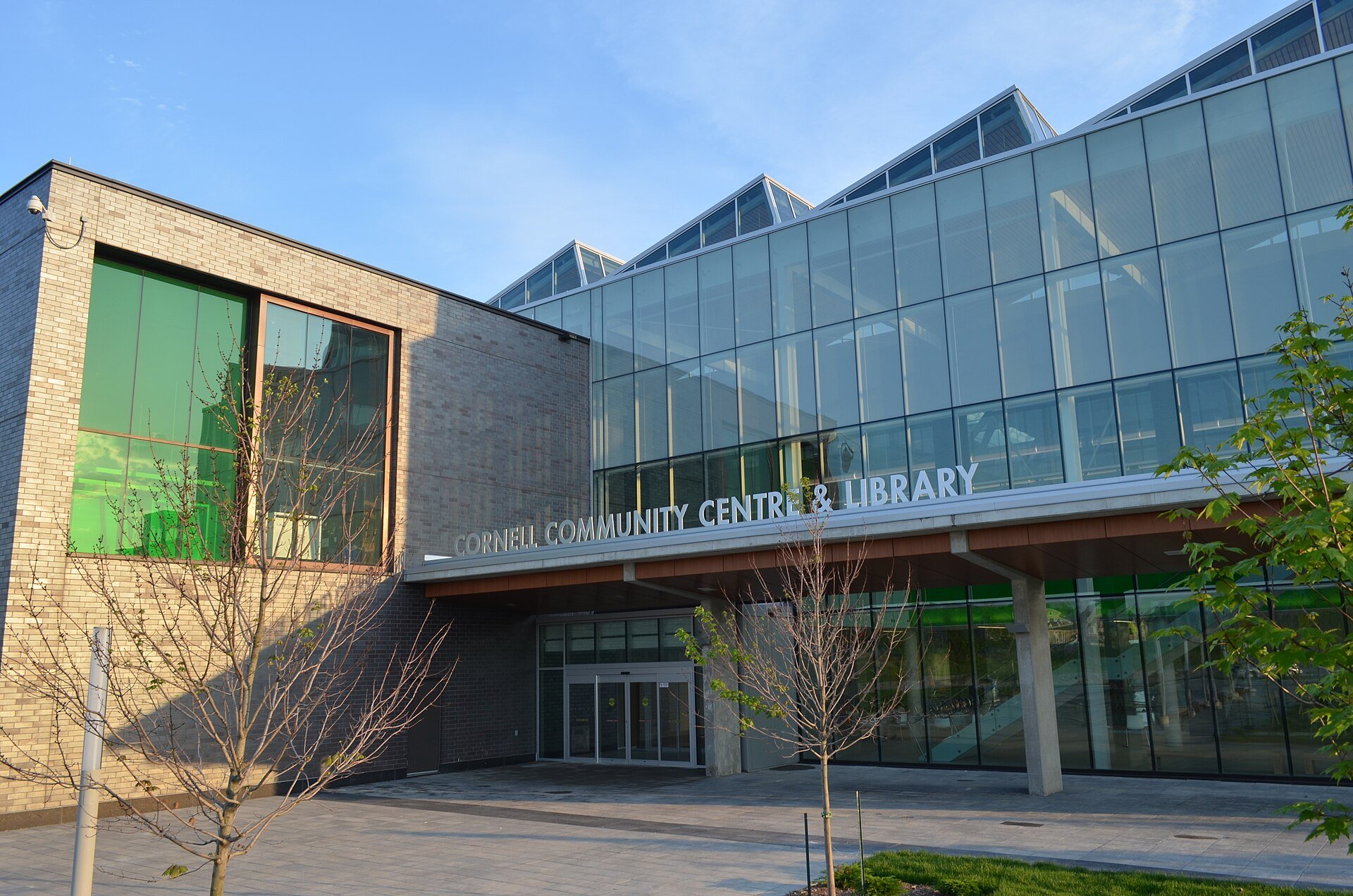
The Cornell Community Centre and Library, open since December 2012 at Bur Oak Avenue and Church Street, is the hub of the community, with three pool areas, a gymnasium and a branch of the Markham Public Library, and the building won design awards in 2013 and 2014. Markham Stouffville Hospital, run by Oak Valley Health on Church Street since 1990, provides emergency, childbirth, surgical and cancer care. Cornell Community Park has a large playground, water play, a skateboard area, a walking trail, a toboggan hill and a covered picnic area with washrooms, together with lit soccer fields, two hardball diamonds, tennis courts and eight pickleball courts, and Cornell Woodlot Park on William Forster Road has one of Markham's leash-free dog areas. The nearest Rouge National Urban Park trailhead with parking is at Bob Hunter Memorial Park, south of Highway 407.
For daily needs, Longo's, Starbucks and a medical centre are at Box Grove, a few minutes south across Highway 407, and Walmart is on Copper Creek Drive. Markham's older Main Street and the shops of Markham Village are a short drive west.
Cornell is well served by schools. The York Region District School Board operates Cornell Village Public School, which opened in 2003, Little Rouge Public School (2007), Black Walnut Public School (2012) and Rouge Park Public School (2019), along with Bill Hogarth Secondary School, which opened in the 2017-18 school year and offers French Immersion as well as the English program. A site on Bur Oak Avenue has been set aside for a future public school in South Cornell. Catholic families are served by St. Joseph Catholic Elementary School on White's Hill Avenue and by St. Brother André Catholic High School, just west of Cornell on 16th Avenue. School boundaries are set by the boards and can change from year to year, so families should confirm the designated schools for a specific address with the York Region District School Board or the York Catholic District School Board.
The Cornell Bus Terminal on Rustle Woods Avenue, opened in September 2022 beside the hospital, is served by Viva Purple along Highway 7, local York Region Transit routes and GO buses. Cornell has no GO train station of its own, and the nearest, Markham GO and Mount Joy GO on the Stouffville line, are a short drive west. Highway 407 runs along the south end of the community, with interchanges at Ninth Line and Donald Cousens Parkway.
Frequently Asked Questions
Where is Cornell in Markham?
Cornell is on the east side of Markham, east of Ninth Line, running from Donald Cousens Parkway in the north to Highway 407 in the south, with Rouge National Urban Park to the east. 16th Avenue and Highway 7 run through it, and Markham Stouffville Hospital sits at its centre.
Is South Cornell part of Cornell?
Yes. South Cornell is the part of Cornell between Highway 7 and Highway 407. Its first residents moved into Grand Cornell, on its west side, in 2006, and the newest homes are on its eastern streets. On the Toronto Regional Real Estate Board, South Cornell homes are listed under the Cornell community.
When was Cornell built?
Cornell was planned after a provincial design competition in 1992 and adopted by Markham in 1994. Construction began in 1997, and the first residents of Cornell Village moved in during 1998 and 1999. Later neighbourhoods followed, including Cornell Rouge and Grand Cornell from 2006, and building continues in South Cornell and along Highway 7.
Why are the garages behind the homes in Cornell?
Cornell's plan places garages on laneways behind the houses, so that the street front is given over to porches, sidewalks and trees. Most homes have a garage and a parking pad on the laneway, and overnight street parking on many streets requires a seasonal permit from the City.
What is a coach house in Cornell?
A coach house is a self-contained suite built above a detached garage on the laneway, separate from the main house. Cornell's original plan made room for them, and they range from one to three bedrooms. Owners use them as income properties or as space for extended family.
Can I add a coach house to a home in Cornell?
In many cases, yes. Some properties lack the parking or setbacks the City requires, but the City's rules for adding a coach house over a detached garage are well established, and several local construction companies specialize in the work.
What schools serve Cornell?
Cornell has four public elementary schools, Cornell Village, Little Rouge, Black Walnut and Rouge Park, along with Bill Hogarth Secondary School and St. Joseph Catholic Elementary School. St. Brother André Catholic High School is just west on 16th Avenue, and a site on Bur Oak Avenue is set aside for a future public school. Families should confirm the designated schools for a specific address with the school boards.
What is being built along Highway 7 in Cornell?
Cornell Centre, along Highway 7, is planned for much higher density, with condominium buildings, shops and services. Council approved four projects there in 2023 and 2024 with more than 6,000 homes between them, and as of November 2026 no construction start had been announced for any of them.
Does Cornell have a GO station?
No. The Cornell Bus Terminal, beside the hospital, has Viva, York Region Transit and GO bus service, and the nearest GO train stations are Markham GO and Mount Joy GO on the Stouffville line, a short drive west.
Considering a Move to Cornell?
Whether you own a home in Cornell and would like to know what it is worth in today's market, or you are weighing a townhome in Cornell Rouge against a detached home with a coach house in Cornell Village, we would be pleased to help. We have sold homes in Cornell over the years, and we understand how the phase, the lot and a coach house shape a home's value. Contact The MAC Team or request a free home value consultation to get started.
Sources include the City of Markham, York Region, the York Region District School Board, the York Catholic District School Board and Madison Group. Plans for future development are subject to change.