
Toronto

Toronto Is Giving Away Fourplex and Sixplex Blueprints

Toronto spent a decade arguing about whether small apartment buildings belong on residential streets.  Now it is handing out the drawings.

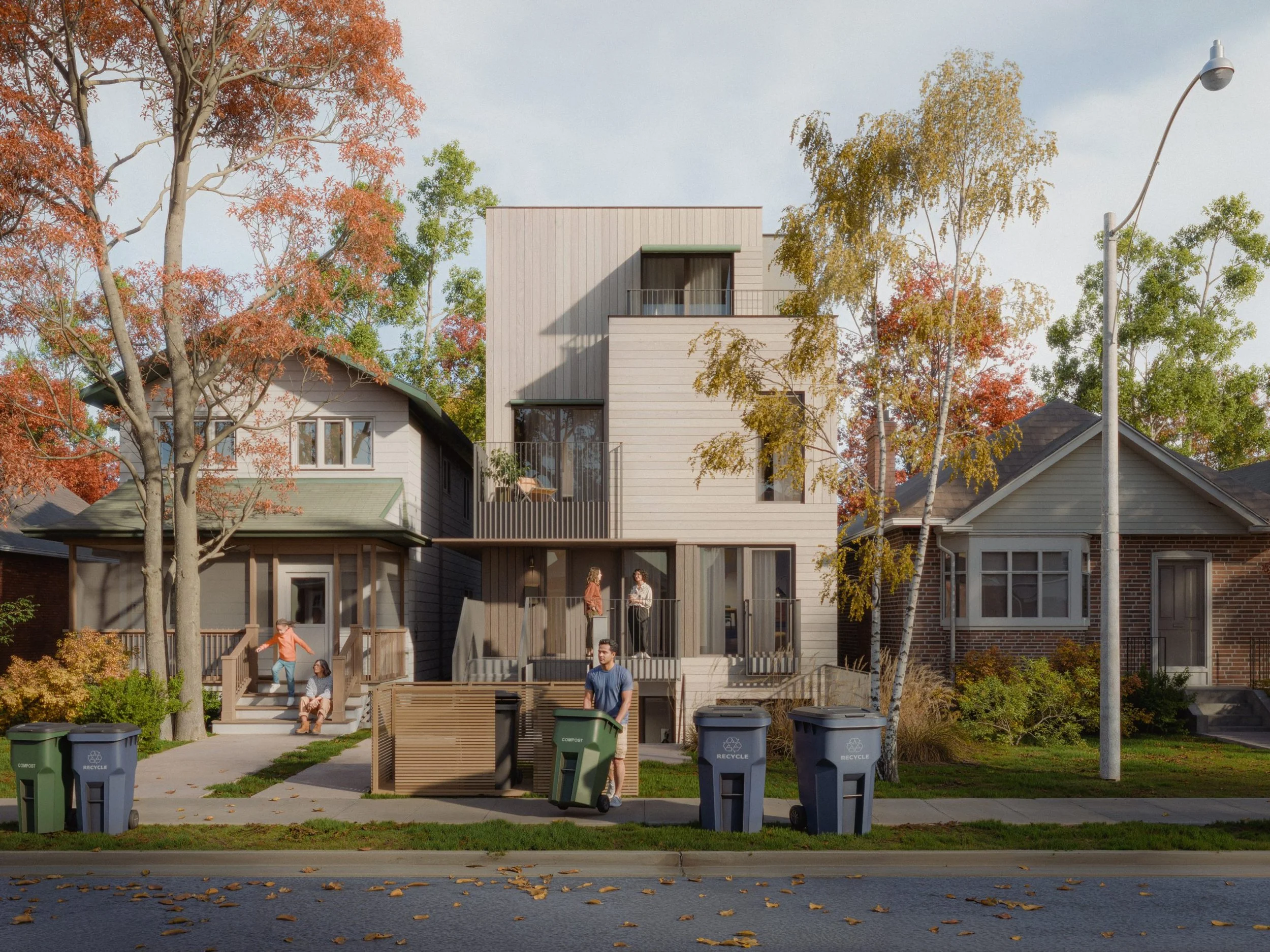
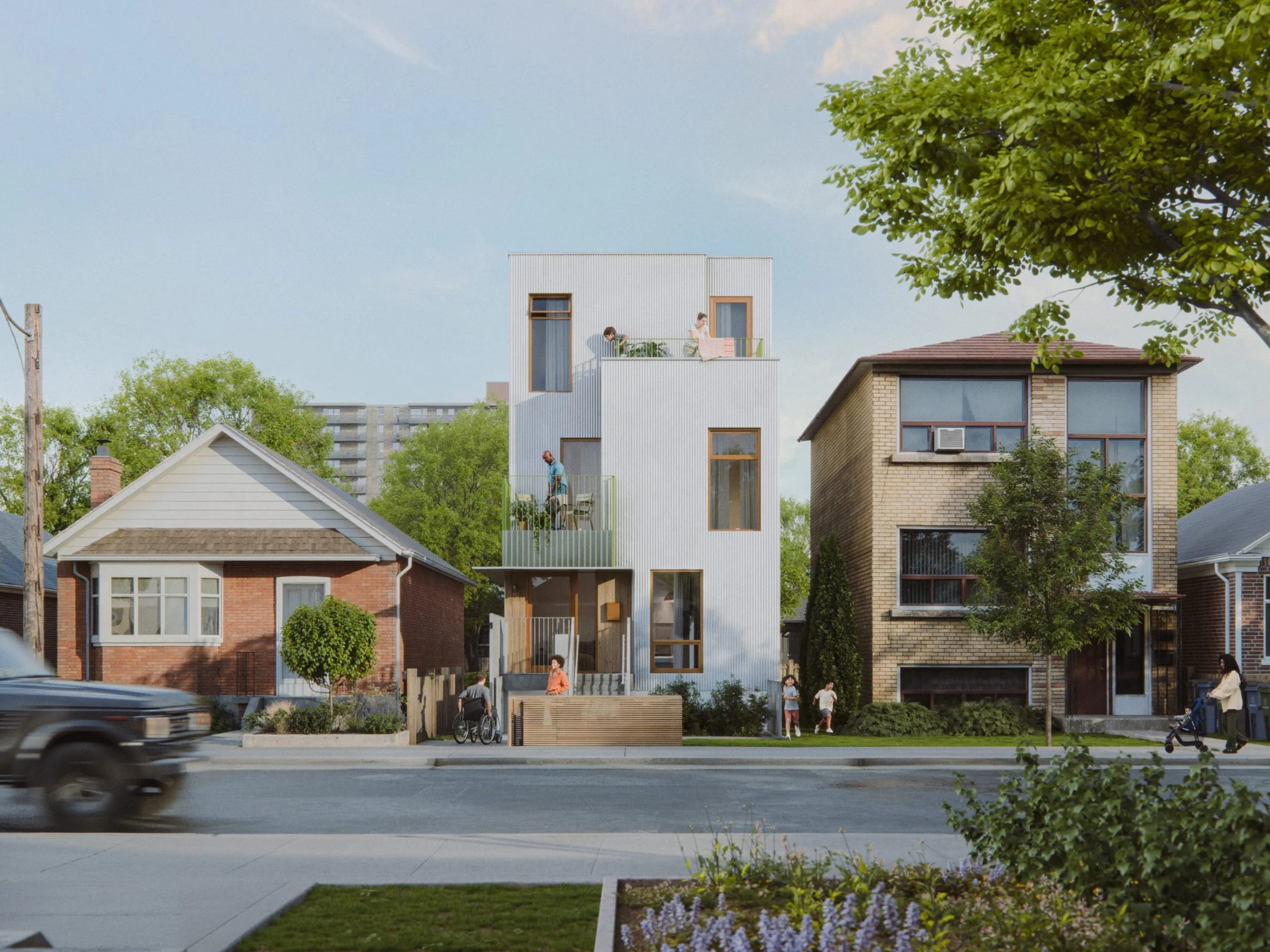
The city has released a set of made-in-Toronto pre-approved designs for fourplexes and sixplexes, free for any property owner to download and use as the starting point for a building permit application.  The plans already meet the Ontario Building Code and Toronto's zoning rules, and they extend a catalogue the city began with its garden and laneway suite designs.  Maia Tustonic covered the launch in the Toronto Star on October 7.
Toronto Fourplex Design Sample 1
Toronto Fourplex Design Sample 2

Some context for readers who have not followed this file closely.  Fourplexes have been legal on residential lots across Toronto since May 2023, and fiveplexes and sixplexes have been allowed in parts of the city without special permissions since last year.  What was missing was an affordable way to get from a legal right to a permit-ready drawing.  The new designs come in versions for narrow and wide lots, with options for bicycle parking, waste storage and features like heat pumps and solar, and builders can choose between brick and siding to manage the budget.  Kamal Gogna, the city's chief building official, says planning staff studied the most common Toronto lot sizes so the plans would fit real streets rather than ideal ones.  There is one catch worth underlining: a free plan is not a stamped drawing.  An owner still needs a qualified designer to adapt the design to their particular lot before the city will look at a permit application.

So what is the giveaway actually worth? Ron Sheinin of Modcity, a builder who does this work for a living, told the Star that designing a fourplex from scratch can run up to $60,000 in architectural fees and roughly another $20,000 for engineering, and the drawings alone take a month or two.  Start from a proven plan and a good chunk of that time and money comes back, which matters most to exactly the people this program is aimed at: the owner or small investor attempting a first multiplex, for whom the design stage is the most intimidating part of the project.

The skeptics have a point too.  Sean Galbraith, who runs an urban planning firm, argues that design fees were never what stopped multiplexes from being built; land and construction costs are the real wall, and they dwarf the architect's bill.  Toronto's lots also vary enormously in width, depth and grade, and a stock plan only helps if your lot happens to suit it.  "It's nice to have, but it's not going to move the needle much," he told the Star.

My own reading sits between the two.  Taking $80,000 of soft costs and two months of carrying time out of a small project is real money; on a tight pro forma it can be the difference between proceeding and passing.  But the more important thing here is the direction of travel.  Ten years ago, Canadian cities treated this housing form as something to be fought at committee.  Today the country's largest city is publishing the blueprints itself, and Ottawa put out its own catalogue of standardized home designs last year.  Governments have gone from permitting gentle density to actively packaging it, and I do not see that shift reversing.

These particular drawings stop at the Toronto border, but the thinking behind them does not.  Every Ontario municipality, Markham included, has had to allow up to three units on most residential lots since the province changed the rules in 2022, and the pressure to go further keeps building.  I notice it in a practical way: when I walk a wide lot in Markham Village or old Thornhill with a seller now, the conversation is as much about what the land could hold as about the house sitting on it.  Small builders are running that arithmetic quietly on ordinary streets, and on certain lots they are the strongest buyers in the field.

If you own a wide or deep lot on an older street, some part of your property's value now lives in what could be built there, and that part is growing.  Knowing that number before the sign goes up is the difference between pricing a house and pricing a property.  I have been doing more of this lot arithmetic this fall than ever, and if you suspect your property is one of these, it is a short conversation that can change the asking price.

Check out Toronto’s Multiplex plans for yourself here.


(Source: "City releases new fourplex, sixplex designs," Maia Tustonic, Toronto Star, October 7, 2026.)

Toronto's Vacant Home Tax

As of January 1st, 2023, Toronto has now implemented a “vacant home tax”, directed at properties that are not occupied for at least 6 months of the year.

What you need to know:

Residential properties in Toronto that are unoccupied for more than six months (cumulative) in a calendar year, may be subject to the new City of Toronto's Vacant Home Tax (VHT), unless they meet one of the exemptions. The VHT was created to improve the supply of housing in the city.

  1. A declaration form will need to be completed by property owners by February 2, 2023.

  2. A property is considered vacant if it is not the principal residence of the owner or any permitted occupants or was not occupied by tenants for at least six months during the previous calendar year or is otherwise deemed to be vacant under the bylaw.

  3. The tax is 1 per cent of the current value assessment (CVA) of the home.

  4. Exemptions include principal residence, death, repairs, units undergoing major renovation, owner is in care or hospital, court order, transfer of legal ownership and occupancy for full-time employment is in place.

When Buying or Selling:

The Vacant Home Tax has implications for property transactions, both for purchasers (buyers) and vendors (sellers):

  • It is the responsibility of buyers and sellers to make the appropriate arrangements to ensure that the declaration has been filed.

  • The Vacant Home Tax will form a lien on the property, and any unpaid taxes will become the buyer’s responsibility.

  • If a closing occurs between January 1 and the closing of the declaration period on February 2, the seller must complete the declaration prior to the closing, as only the seller will know the property’s occupancy status for the prior year.

  • If a closing occurs after the declaration period – February 3 to December 31 – the buyer must submit a declaration in the following year. The buyer qualifies for the “transfer of legal ownership” exemption.

  • The seller should provide a copy of the completed and filed property status declaration to the buyer.

  • The seller should provide a statutory declaration at closing confirming the filed property status declaration is true and correct.

The goal of the VHT is to increase the supply of housing by discouraging owners from leaving their residential properties unoccupied. Homeowners who choose to keep their properties vacant will be subject to this tax.

Toronto & GTA: Market Perspective

It is almost like you need to do a double-take and check the calendar to see if it is indeed 2021, and not 2017. Toronto and most of the GTA has been experiencing all the hallmarks of a continually strong ‘Sellers’ market, with many of the same hallmarks of the 2017 peak.

Mostly attributed to the detached market, we are back to seeing multiple-offer situations on nearly every property on the lower side of the price range. If you are looking for a detach or semi-detached home and have less than $1.7MM to spend, you should prepare yourself for some solid competition.

Condos are a bit of a different scenario - in December we had sales of 2,193 units, and there are currently available for sale 2,934 units on MLS, which equals about 1.33 months' supply. While it has been difficult to move some of the smaller bachelor and studio condos, with a bit of time the larger units are still moving well. Compare that to a total availability of just 1,045 freehold (detach, semi, town) available in all of Toronto.

For comparison purposes, a typical ‘balanced market’ usually has about 4-6 months of ‘supply’ available, versus the sales volume. Interesting to consider - with a total of just under 4,000 total properties for sale, and over 58,000+ registered Agents in the Toronto Board… you can see how there can be immense pressure on what is available.

Unfortunately, that competition for properties - and between Agents - often comes along with a lack of proper advice, borderline unethical behaviour, and some Agents putting their own needs ahead of their Clients. We are seeing all sorts of crazy ‘offers’, especially for new Buyers, going into situations they are simply not prepared for — no protection for arranging financing, or home inspections in many cases. The lesson here is that despite the bit of bedlam the current market is bringing us, it does not reduce the liability of an Agent, nor mean that you should ignore all the risks just to try to win a deal.

There are many other ways to protect yourself as both a Buyer or a Seller, do things the right way, and still come out ahead.

If you are thinking of buying or selling, before you make a move - call us! We are always available to talk about strategy, the marketplace, and of course here to offer the best possible advice and guidance we can, no strings attached.