
new buyer

What Ontario's HST Rebate on New Homes Means for Markham Sellers This Fall

If you are planning to sell a detached home or a freehold townhouse in Markham this fall, the thing that has changed most is not the interest rate, it is who you are competing against.  Ontario's expanded HST rebate applies only to newly built homes, and over the summer it has pulled a meaningful share of buyers toward builder inventory, with single-family new home sales across the GTA finishing July up 246% over the same month a year ago.  What follows is what that shift does to your pricing and your marketing, and where an established Markham home still holds a real advantage.

The July numbers, and why they are unusual

Builders sold 1,018 new homes across the GTA in July, and 781 of those were single-family: detached, semi-detached, linked and townhomes.  That puts the single-family category roughly 50% above its ten-year July average, which is a genuinely unusual reading in a market most people still describe as slow.  At the same time, the benchmark price on those new single-family homes was $1,362,433, down 8.5% from a year ago, while new condominium apartments sold 80% below their ten-year average (source: BILD and Altus Group new home sales release for July 2026, published August 27).

I read those two facts as one story rather than two.  Builders have been discounting, the rebate stacks on top of the discount, and buyers who spent the last two years waiting have decided that the combination is finally worth acting on.  Dave Wilkes at BILD described it as the fourth consecutive month of positive momentum in the single-family category, and the pattern in the numbers supports him.

The part that catches resale sellers off guard

The rebate does not apply to a resale home.  When a buyer sits down and compares your house in Markham Village, Unionville or Cornell against a new release a few minutes up the road, they are weighing your asking price against a builder's price less a rebate that can reach well into five or six figures, and that arithmetic can look unflattering if you have anchored your expectations to what a neighbour achieved in a different market.  I would far rather you hear this from me in early September than work it out for yourself in late October, after a month of polite showings and no offers.

This is not a reason to be discouraged, and it is certainly not a reason to give the house away.  It is a reason to price and present against what is actually on the market right now instead of against memory.

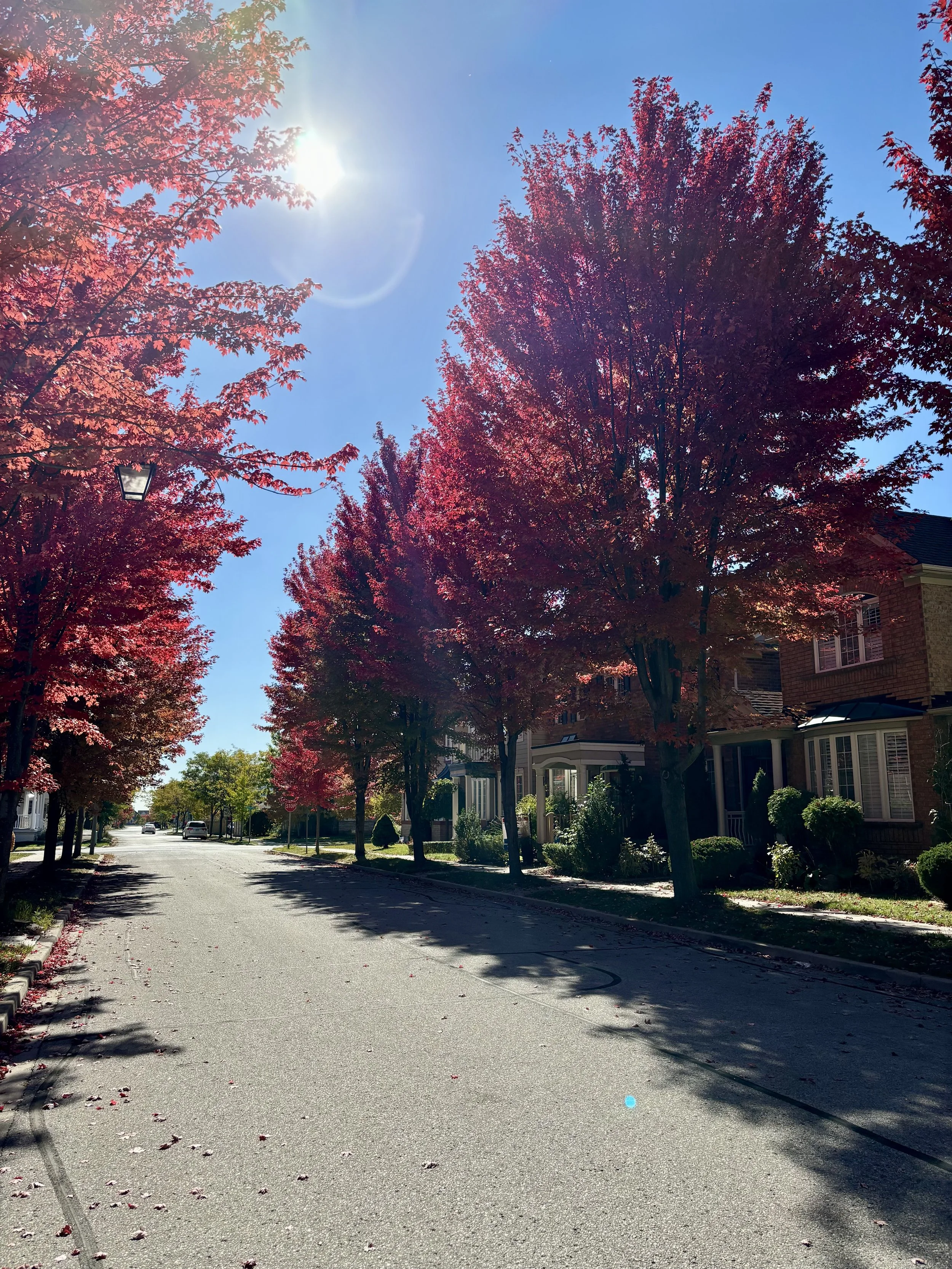
Mature Tree Lined Street in Markham

Mature Tree Lined Street in Markham

Where an established Markham home still wins

A new build is a floor plan and a rendering, and for a lot of buyers that is exactly the appeal.  But an established home in Unionville, Markham Village, Berczy, Wismer, Swan Lake or Cornell offers a set of things a builder simply cannot put in a brochure: mature trees and finished landscaping that would take fifteen years to grow in, a school assignment that is settled today rather than promised, a closing date you can actually plan a move around, and no development charge adjustments or occupancy delays waiting at the end of the process.  There is also no HST on the purchase price of a resale home, which is worth saying plainly to any buyer who has been doing the builder math and has not thought it through.

When I take a listing in one of these neighbourhoods, that is the conversation I want the marketing to be having.  Photograph the mature canopy, the established gardens, the finished basement that a new owner would otherwise spend a year and a great deal of money creating.  Sell the fifteen years the buyer does not have to wait.

How I would price into this market

Markham itself is holding up better than the headlines suggest.  There were 288 sales here in July at an average price of $1,131,324 and a median of $1,062,500, with a sales-to-new-listings ratio of 39.4%, the tightest in York Region, and roughly 4.2 months of inventory.  Across York Region as a whole, new listings were down 18.7% from a year ago (source: TRREB Market Watch, July 2026).  Fewer sellers came to market this summer, which means a well-prepared, sensibly priced home is facing less resale competition than it would have faced last fall, even with the builders active.

So the strategy is not complicated.  Price against the last ninety days of sales on streets genuinely comparable to yours, not against a builder's list price and not against 2022.  Prepare the home properly before it goes live rather than after.  And get out in front of the fall traffic, because the Bank of Canada announces its next rate decision on Wednesday, September 2, and the buyers who have been waiting on that news will be looking the following weekend.

The bottom line

The HST rebate has given builders an advantage on price that a resale seller cannot match dollar for dollar, so do not try to.  Compete instead on the things an established Markham neighbourhood already owns: mature setting, certainty, and a closing you can plan around, priced honestly against the last ninety days.  If you are thinking about a fall sale, I am glad to walk through your home, tell you candidly what is worth doing and what is not, and put real local numbers behind the pricing conversation.

Brad

The Markham Upsizer's Playbook: Where Detached Homes and Townhomes Actually Make Sense

Upsizing in Markham, Ontario typically means bridging a gap of roughly $400,000 between a starter condo, semi, or townhome and a full detached house - and the neighbourhood you choose matters more than the house, because school catchments, GO station access, and lot vintage drive resale here more than finishes do. For most move-up buyers, the practical shortlist comes down to six communities: Berczy, Wismer, Cornell, Greensborough, Cathedraltown, and Markham Village — with Unionville as the stretch goal. This guide breaks down what each one actually costs, what you get for it, and the street-level details that don’t show up on a listing sheet.

Last updated: July 6th 2026 · By Brad Macdonald, Broker, The MAC Team — RE/MAX All-Stars Realty Inc.

Which Markham neighbourhoods are best for upsizing into a detached home or townhome?

Here’s the comparison most buyers spend three months assembling on their own:

What does upsizing actually buy you in Markham right now?

The move-up ladder in Markham has unusually distinct rungs. This is the spread between them:

Markham upsizer neighbourhoods at a glance — July 2026
NeighbourhoodFreehold townhomeDetached (main segment)Lot characterNearest GOKnown for
Berczy$1.15M–$1.35M$1.7M–$2.2M2000s, 36–45 ft lotsCentennial / Mount JoyPierre Elliott Trudeau H.S. catchment
Wismer$1.1M–$1.3M$1.5M–$1.9M2000s–2010s, 30–40 ft lotsMount JoyBur Oak Ave corridor, parks every few blocks
Cornell$1.05M–$1.25M$1.4M–$1.8MNew-urbanist, rear lanewaysMarkham (via Cornell Terminal)Hospital, Rouge Park at the doorstep
Greensborough$1.05M–$1.25M$1.45M–$1.8M2000s, 36–42 ft lotsMount Joy (walkable)Best GO-walkability per dollar
Cathedraltown$1.1M–$1.3M$1.6M–$2.1M2010s, compact prestige lotsHwy 404 insteadCathedral landmark, 404 commuters
Markham Village / Raymerville$1.0M–$1.2M$1.35M–$1.7M1970s–80s, 50 ft+ mature lotsMarkhamBiggest lots per dollar in the city
Unionville (stretch)$1.3M–$1.6M$2.1M–$3.5M+Mixed vintage, premium streetsUnionvilleMain Street, Toogood Pond, Unionville H.S.

Source: TRREB MLS® data, trailing 90 days. Bands are orientation, not appraisal.

The Markham move-up ladder — July 2026
RungTypical priceGap to next rung
Condo townhome / stacked town$850K–$1.0M+$150K–$250K
Freehold townhome (often POTL)$1.05M–$1.35M+$300K–$450K
Link / semi-detached$1.25M–$1.5M+$200K–$400K
Detached, 30–36 ft lot$1.45M–$1.8M+$250K–$400K
Detached, 40–50 ft lot$1.7M–$2.2M

Two structural notes upsizers consistently miss:

  • The townhome-to-detached gap is the expensive jump. If your end goal is detached, an intermediate move into a freehold town often costs more in total transaction friction (see our complete upsizing cost walkthrough) than waiting one more year and jumping directly.

  • “Freehold” townhome usually means POTL here. Most post-2005 Markham townhomes are Parcel of Tied Land: you own the home freehold but pay a monthly common-element fee (commonly $75–$150/month) for the private laneway, visitor parking, and snow on shared surfaces. It’s not a red flag — but it is a condominium corporation on paper, which means your lawyer should review a status certificate before you firm up. If that sentence surprised you, you’re in the majority.

Neighbourhood-by-neighbourhood: the upsizer’s read

Berczy: is it worth paying the school premium?

Berczy trades at a premium of roughly 5% over near-identical homes in adjacent Wismer, and the honest explanation is four words: Pierre Elliott Trudeau High School. The catchment premium is real, durable, and priced in — you don’t make money buying it, you preserve money owning it, because catchment demand puts a floor under resale in soft markets.

What to know on the ground: the housing stock between Bur Oak Avenue and 16th Avenue is early-2000s builder stock, mostly 38–45 ft lots, and the streets off The Bridle Walk are where the larger floor plans cluster. Verify the catchment address-by-address with YRDSB before you waive conditions — boundaries in this part of Markham have been reviewed before as schools filled, and “in Berczy” does not automatically mean “in the Trudeau catchment.”

Wismer: the practical default for detached upsizers

If Berczy is the school play, Wismer is the value play with 90% of the same daily life. Same builders, same era, same Bur Oak Avenue retail spine (the plaza-and-park rhythm along Bur Oak is genuinely walkable in a way most of suburban York Region is not), Mount Joy GO on the Stouffville line at its edge, and Bur Oak Secondary School serving most of the community. Detached inventory here turns over steadily, which means more choice per season than Berczy and less bidding pressure per listing.

Cornell: the townhome capital — with one thing to check

Cornell is Markham’s new-urbanist experiment that actually worked: rear-lane garages, porches to the street, and the densest concentration of well-designed freehold townhomes in the city. It’s also home to Cornell Community CentreMarkham Stouffville Hospital, the Cornell Bus Terminal, and it backs directly onto Rouge National Urban Park — trail access from a townhome price point that nothing west of McCowan can match.

The thing to check: laneway townhomes vary enormously in garage configuration and functional parking. Some blocks have double garages plus a lane apron (effectively 3–4 spots); others have a single garage and a no-parking lane. For an upsizing family with two vehicles, this single detail should filter your Cornell townhome shortlist before price does.

Cornell Village, Markham, Ontario

Greensborough: the GO-walk neighbourhood nobody prices correctly

Much of Greensborough sits within a genuine 10–15 minute walk of Mount Joy GO, yet it trades at a discount to Berczy and roughly at par with Wismer. For a household where one earner commutes downtown on the Stouffville line and the other drives, this is arguably the best-priced detached quadrant in Markham. Inventory skews 2000s, 36–42 ft lots, with family-sized floor plans concentrated between Bur Oak Avenue and Major Mackenzie.

Cathedraltown: for the Highway 404 commuter

Cathedraltown, at Major Mackenzie and the 404, is the choice when the commute is by car, not by train. The neighbourhood is instantly recognizable — it’s built around the Cathedral of the Transfiguration, and yes, that is a giant stainless-steel cow (“Charity”) on a plinth that residents have debated since it went up; you’ll have an opinion within a week. Lots are compact for the price tier, so you’re paying for architecture, location, and the 404 on-ramp rather than backyard square footage. Best fit: upsizers leaving a townhome who care more about the house than the lot.

Markham Village & Raymerville: the mature-lot arbitrage

The oldest trick in the Markham upsizer’s book: a 1970s–80s detached on a 50–60 ft mature lot in Markham Village or Raymerville often costs the same as — or less than — a 2010s detached on 36 ft further north. You trade modern layouts for land, trees, and proximity to Main Street Markham and Milne Dam Conservation Park (the largest green space in the city that isn’t Rouge Park, and locals’ default for trails and the fall salmon run on the Rouge River). Budget honestly for updating: kitchens, windows, and wiring of this vintage absorb $150K if the home hasn’t been touched.

Unionville: the stretch goal, priced accordingly

Unionville is the destination neighbourhood - Main Street, Toogood Pond, Varley Art Gallery, Unionville High School’s arts program - and it’s priced like one. For upsizers, the realistic entries are the townhomes and links on the neighbourhood’s edges at $1.1M–$1.3M, or older detached needing work. If Unionville is the goal, start with our Unionville page — the dynamics there deserve their own article.

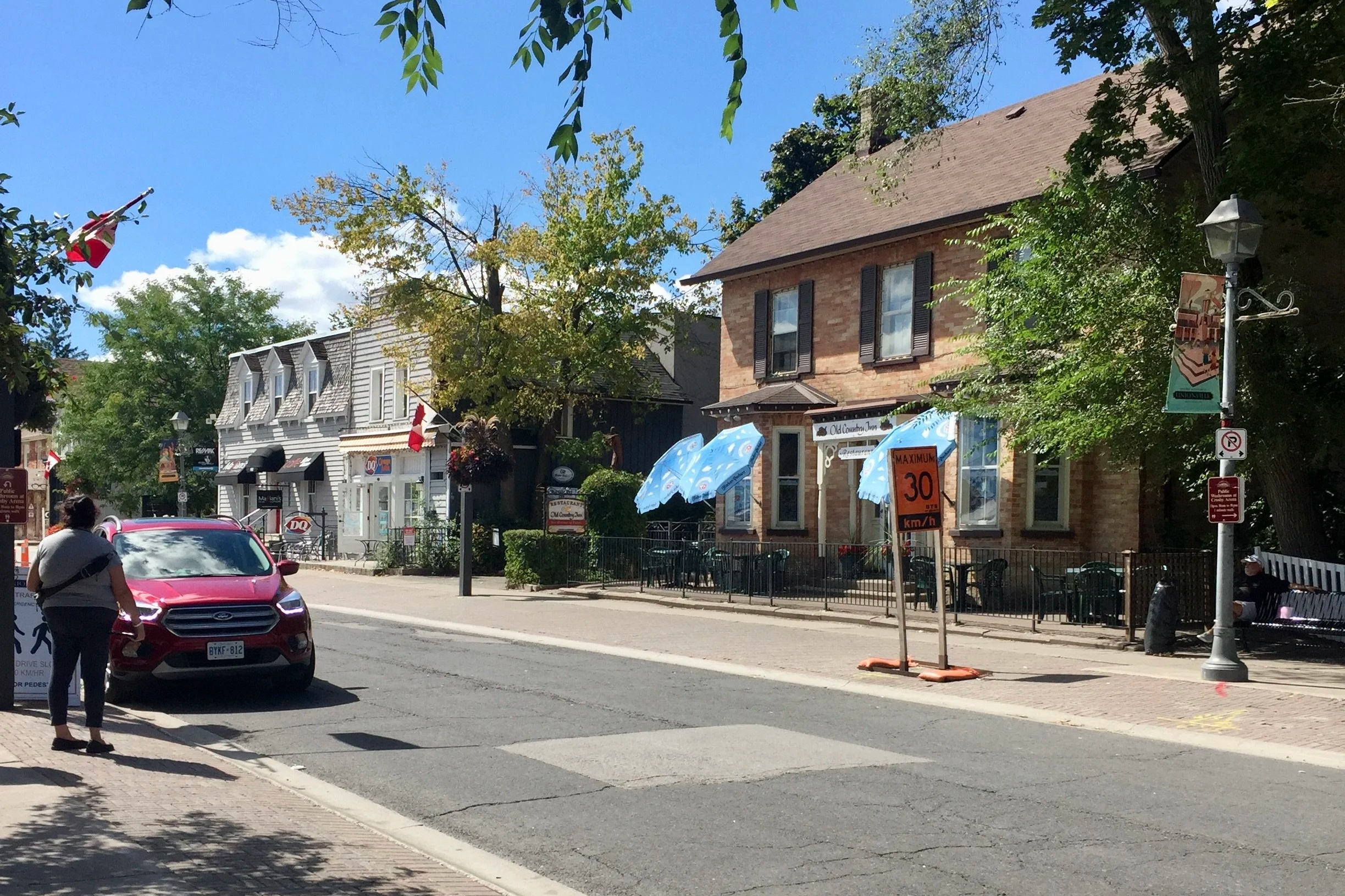
Main Street Unionville, Ontario

Inside-local knowledge: what only showings teach you

  • The Stouffville GO line is the spine of upsizer Markham. Four stations serve the city — Unionville, Centennial, Markham, and Mount Joy, south to north. Parking pressure differs sharply by station; if the commuting spouse drives to the GO, test the actual lot at 7:40 a.m. on a Tuesday, not on a Saturday viewing trip.

  • Viva Purple runs dedicated rapidway lanes along Highway 7 — relevant if you work along the 7 corridor, and a genuine amenity for teenagers who don’t drive yet.

  • Bill Crothers Secondary School has no catchment. It’s application-based (athlete-focused), so no house purchase gets you in — don’t pay a premium a listing agent attaches to “near Bill Crothers.”

  • Catchment maps move. Fast-growing communities here have seen boundary reviews as schools hit capacity. Confirm the current YRDSB/YCDSB boundary for the specific address in writing during your conditional period.

  • POTL fees are per-corporation, not per-neighbourhood. Two visually identical townhome rows a block apart can carry fees $60+/month apart depending on how much private road each corporation maintains. It’s on the status certificate; read it.

  • Aaniin Community Centre (south) and Angus Glen Community Centre (north) bracket the city — proximity to one is a daily-life factor families weight heavily after moving in, and almost never during the search.

Detached vs. townhome: the honest trade-off table for upsizers

Detached vs. townhome for upsizers
FactorFreehold townhome (POTL)Detached
Entry price$1.05M–$1.35M$1.4M+
Monthly carrying extraPOTL fee $110–$180None (all maintenance is yours)
Snow / lawnShared surfaces done for youYours, entirely
Lot / yardMinimalThe point
Resale liquidityHigh — biggest buyer pool in the cityHigh, segmented by lot size
Legal wrinkleStatus certificate reviewStandard freehold

The next step (no pressure version)

If you’re within 12 months of making this move, the most useful thing we can offer isn’t a sales call — it’s the Markham Upsizer’s Street-Level Shortlist: a custom map built for your budget, school priorities, and commute pattern, marking the specific streets (not just neighbourhoods) that fit, plus our current watchlist of coming-soon and off-market homes in those pockets that haven’t hit MLS®. Request it through our getting-started page — it takes us about two days to build and it’s yours either way.

The MAC Team — RE/MAX All-Stars Realty Inc., 5071 Hwy 7, Unit 5, Markham. Market figures are drawn from TRREB MLS® data and are illustrative; for current numbers, request a valuation or browse our latest market takes.

Homeowner Protection Act 2024 Announced

Yesterday, the Government of Ontario announced the Homeowner Protection Act, 2024 – with several major wins for Ontario REALTORS® and hardworking families across the province, which OREA has advocated for in recent months and years.

The Act includes several REALTOR®-led advocacy priorities, most notably a 10-day cooling-off period for buyers of newly built freehold homes. This will allow purchasers 10 days to review and cancel an agreement without penalty, a protection that is already in place for pre-construction condo sales in Ontario. Extending this protection to newly constructed homes will enhance consumer protection and level the playing field between hardworking families and corporate developers.

Notably the Government will not be extending this protection to resale homes, which would have negatively impact both buyers and sellers.

The new legislation also bans the registration of Notices of Security Interest (NOSIs), reducing unnecessary fees from being tacked onto the price tag of a home. Too many Ontarians, when selling their home, have been surprised by one or more NOSIs – fine print in contracts for water coolers, furnaces, or security systems that include exorbitant buyout charges to be paid before the home can be sold.

Additionally, the Act will modernize zoning rules to allow for more homes to be built near public transit, making it easier and faster to increase Ontario’s housing supply in urban areas – a change that OREA has long-advocated for, including in their recent report, Analysis of Ontario’s Efforts to Boost Housing Supply.

The Homeowner Protection Act, 2024 is a significant step toward enhancing consumer protection for Ontarians making one of the largest transactions in their lives, all while building much-needed housing supply across the province.