housing market

Toronto Is Giving Away Fourplex and Sixplex Blueprints

Toronto spent a decade arguing about whether small apartment buildings belong on residential streets.  Now it is handing out the drawings.

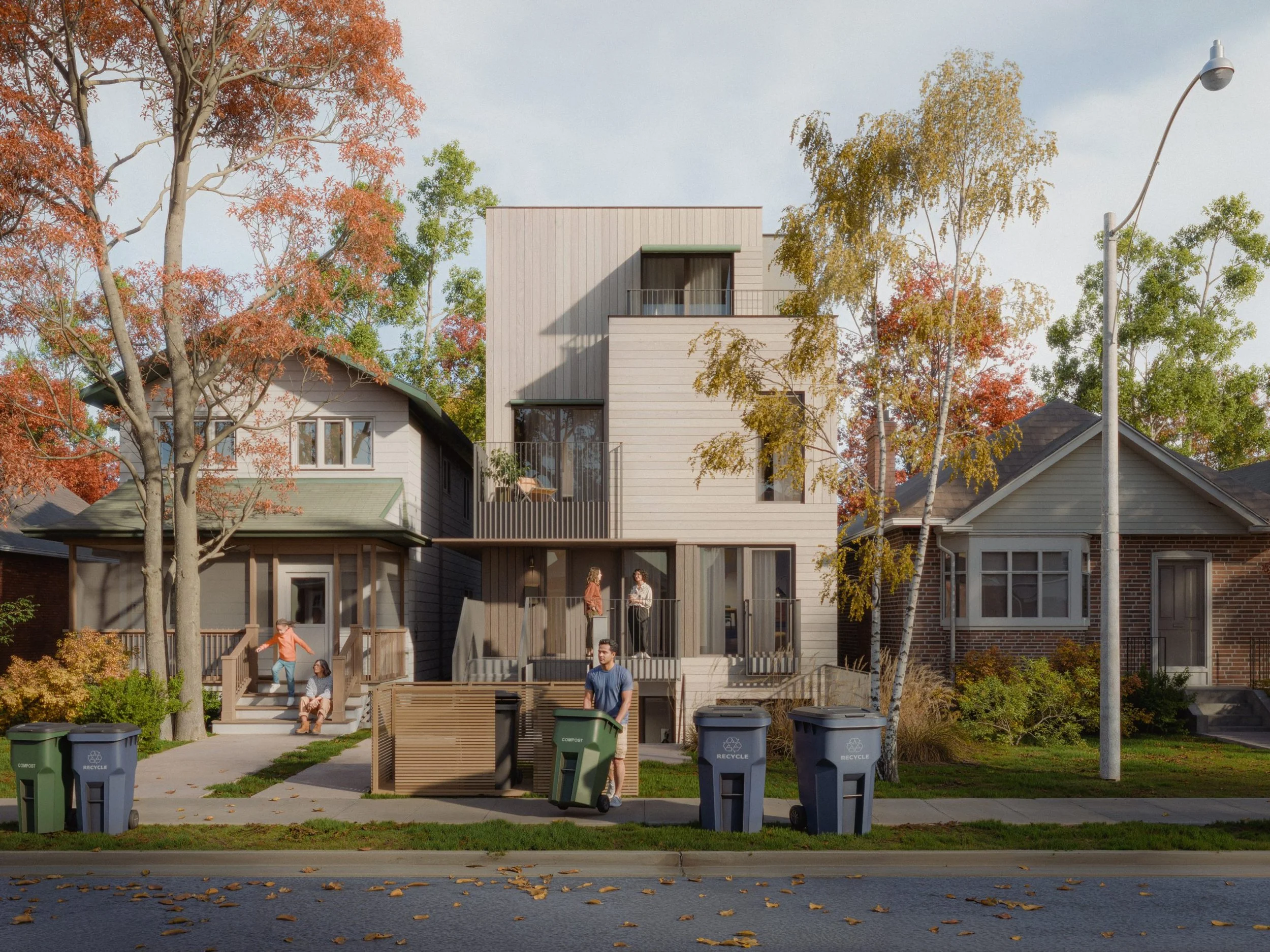
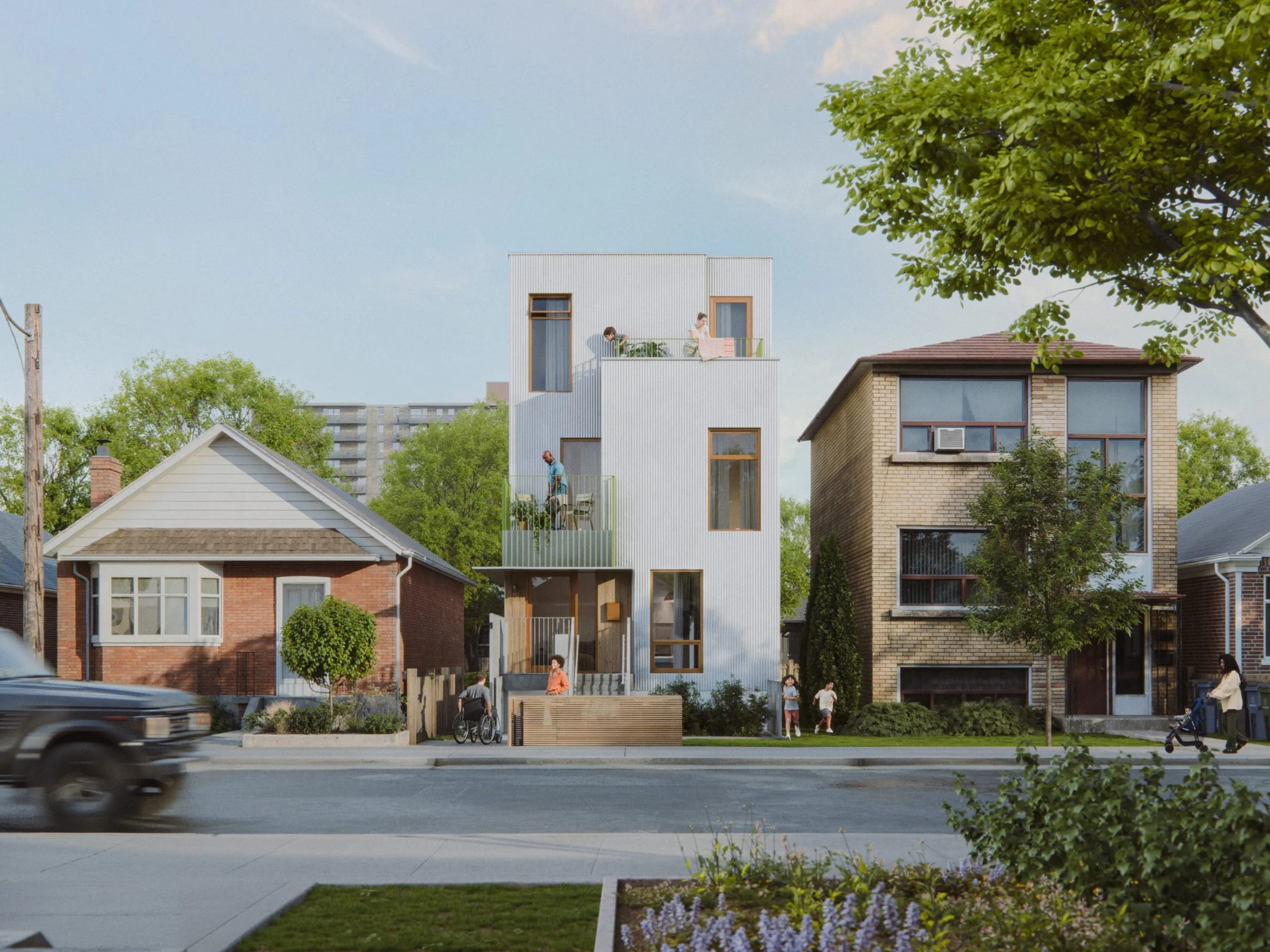
The city has released a set of made-in-Toronto pre-approved designs for fourplexes and sixplexes, free for any property owner to download and use as the starting point for a building permit application.  The plans already meet the Ontario Building Code and Toronto's zoning rules, and they extend a catalogue the city began with its garden and laneway suite designs.  Maia Tustonic covered the launch in the Toronto Star on October 7.
Toronto Fourplex Design Sample 1
Toronto Fourplex Design Sample 2

Some context for readers who have not followed this file closely.  Fourplexes have been legal on residential lots across Toronto since May 2023, and fiveplexes and sixplexes have been allowed in parts of the city without special permissions since last year.  What was missing was an affordable way to get from a legal right to a permit-ready drawing.  The new designs come in versions for narrow and wide lots, with options for bicycle parking, waste storage and features like heat pumps and solar, and builders can choose between brick and siding to manage the budget.  Kamal Gogna, the city's chief building official, says planning staff studied the most common Toronto lot sizes so the plans would fit real streets rather than ideal ones.  There is one catch worth underlining: a free plan is not a stamped drawing.  An owner still needs a qualified designer to adapt the design to their particular lot before the city will look at a permit application.

So what is the giveaway actually worth? Ron Sheinin of Modcity, a builder who does this work for a living, told the Star that designing a fourplex from scratch can run up to $60,000 in architectural fees and roughly another $20,000 for engineering, and the drawings alone take a month or two.  Start from a proven plan and a good chunk of that time and money comes back, which matters most to exactly the people this program is aimed at: the owner or small investor attempting a first multiplex, for whom the design stage is the most intimidating part of the project.

The skeptics have a point too.  Sean Galbraith, who runs an urban planning firm, argues that design fees were never what stopped multiplexes from being built; land and construction costs are the real wall, and they dwarf the architect's bill.  Toronto's lots also vary enormously in width, depth and grade, and a stock plan only helps if your lot happens to suit it.  "It's nice to have, but it's not going to move the needle much," he told the Star.

My own reading sits between the two.  Taking $80,000 of soft costs and two months of carrying time out of a small project is real money; on a tight pro forma it can be the difference between proceeding and passing.  But the more important thing here is the direction of travel.  Ten years ago, Canadian cities treated this housing form as something to be fought at committee.  Today the country's largest city is publishing the blueprints itself, and Ottawa put out its own catalogue of standardized home designs last year.  Governments have gone from permitting gentle density to actively packaging it, and I do not see that shift reversing.

These particular drawings stop at the Toronto border, but the thinking behind them does not.  Every Ontario municipality, Markham included, has had to allow up to three units on most residential lots since the province changed the rules in 2022, and the pressure to go further keeps building.  I notice it in a practical way: when I walk a wide lot in Markham Village or old Thornhill with a seller now, the conversation is as much about what the land could hold as about the house sitting on it.  Small builders are running that arithmetic quietly on ordinary streets, and on certain lots they are the strongest buyers in the field.

If you own a wide or deep lot on an older street, some part of your property's value now lives in what could be built there, and that part is growing.  Knowing that number before the sign goes up is the difference between pricing a house and pricing a property.  I have been doing more of this lot arithmetic this fall than ever, and if you suspect your property is one of these, it is a short conversation that can change the asking price.

Check out Toronto’s Multiplex plans for yourself here.


(Source: "City releases new fourplex, sixplex designs," Maia Tustonic, Toronto Star, October 7, 2026.)

Toronto Real Estate Market Update: May Brings a Slower Spring and More Buyer Power

Sales Slowdown Creates Opportunity

This past May marked one of the slowest spring real estate markets Toronto has seen in over two decades. According to new data from the Toronto Regional Real Estate Board (TRREB), just 6,244 homes were sold across the GTA — a 13% drop compared to the same time last year.

With the exception of May 2020 during early pandemic lockdowns, this is the lowest number of May sales since 2002. And it’s worth noting: our population has grown by over 35% since then.

Home Prices Edge Down Across the Board

The average sale price across the GTA in May was $1.1 million, representing a 4% decline year-over-year. Different property types experienced varying levels of price correction:

  • Semi-detached homes: down 8.4%

  • Condos: down 7.3%

  • Detached homes: down 5.6%

  • Townhomes: down 3.3%

Lower prices combined with slightly reduced borrowing costs have improved affordability, but many buyers remain hesitant due to broader economic concerns.

Inventory Rising, Confidence Lagging

New listings are on the rise. Nearly 22,000 properties came to market in May — up 14% year-over-year. With more listings and fewer sales, the sales-to-new-listings ratio sits at 28%, confirming a buyers’ market. That means:

  • More choice for buyers

  • Greater negotiating power

  • Slower pace = more time to make decisions

Interest Rates, Trade Tensions & What's Next

Market activity continues to be shaped by economic uncertainty, especially around trade with the U.S. and Bank of Canada interest rate decisions. While some expect a rate cut in the near future, the central bank has so far held steady.

Still, we are seeing early signs of recovery: both sales and prices increased slightly compared to April on a seasonally adjusted basis. That’s two months in a row showing a positive trend.

Final Thoughts

For Buyers, this is a rare moment of leverage — more supply, less competition, and room to negotiate.

For Sellers, pricing strategy and strong marketing are critical to stand out in a crowded marketplace.

Whether you’re looking to move soon or just want to better understand your home’s current value, I’m here to help you navigate today’s evolving market.

BOLD Action Builds Homes

The housing supply and affordability crisis are pushing the dream of homeownership further out of reach for Ontario families.

Last month, OREA released their latest policy report, Analysis of Ontario’s Efforts to Boost Housing Supply. The report outlines 10 action items, based on the recommendations of Ontario’s Housing Affordability Task Force, that will increase housing supply and address the housing affordability crisis. Actions include:

  • Allowing water and wastewater services to be provided through a municipal services corporation, lowering up front costs of purchasing a new home by up to $50,000;

  • Supporting commercial-to-residential conversions with greater density along transit corridors; and

  • Ending exclusionary zoning to unlock more housing supply in existing communities.


Together, all 10 action items would improve affordability and create future generations of homeowners. Read more in last week's Toronto Star op-ed by OREA CEO Tim Hudak.

Please encourage your MPP to take bold action to build more homes.

Fall Outlook & Upcoming Listings To Watch

It’s been a wild summertime — between focusing on everyones well-being amid this pandemic, and skyrocketing interest in GTA area homes and properties, this ‘new normal’ is taking time to get used to!

From RE/MAX Fall Market Outlook:

Canadian housing market expected to remain active for the remainder of 2020 due to pent-up demand and low inventory levels, say RE/MAX brokers and agents

Canadians showing more interest in suburban and rural homes for sale, as work and life dynamics shift 

Canadian housing prices anticipated to increase by 4.6% in the third and fourth quarter according to RE/MAX brokers and agents. This is compared to the earlier prediction by RE/MAX brokers and agents of +3.7% at the start of the year.32% of Canadians no longer want to live in urban centres, opting for rural or suburban communities instead.Canadians are almost equally split in their confidence in Canadian housing market, with 39% as confident as they were before the pandemic, and 37% slightly less confident.

Leading indicators from RE/MAX brokers and agents across the Canadian housing market point to a strong market for the remainder of 2020. According to the RE/MAX Fall Market Outlook Report, RE/MAX brokers suggest that the average residential sale price in Canada could increase by 4.6 per cent during the remainder of the year. This is compared to the 3.7 per cent increase that was predicted in late 2019.

Read more on the RE/MAX blog


Gearing up for some exciting new listings - Coming Soon to Realtor.ca!

TORONTO

  • 3 Bedroom Bungalow

  • Large lot

  • Great family home!

MARKHAM

  • 3 Bedroom Executive home

  • Fully remodelled top to bottom

  • Open-concept

UNIONVILLE

  • Luxurious 4 Bedroom

  • Most-desirable location

  • Top School catchment area

No consensus on house price trends

The Toronto and GTA housing market has often been difficult to analyse housing sales trends, and that is reflected this week with very different opinions on the future housing pricing trends.  

CREA says prices topping out

National home prices continued to rise in February, but the Canadian Real Estate Association (CREA) said Friday that evidence pointed to a market that was “topping out.”

“MLS HPI trends for February show that home price growth is generally slowing,” said Gary Morse, CREA President. “At the same time, price gains and trends differ among housing markets tracked by the index.”

via: http://www.canadianrealestatemagazine.ca


RE/MAX predicts 'heated' spring market

Canada’s housing market won't be cooling down just yet, with a new report by RE/MAX pointing to a growing number of bidding wars in markets across the country.

“Major Canadian real estate markets continued to show exceptional resiliency throughout the first quarter of the year, with strong demand and diminished supply setting the stage for a heated spring 2012,” according to the Re/Max report.

via: http://www.canadianrealestatemagazine.ca

With the diverse nature of the Greater Toronto Area housing market, both views can be correct.  We expect to see continued strength in desireable areas (like Unionville, Markham and Stoufville), and with the currently limited for-sale inventory available, housing prices in these areas are likely to remain strong.