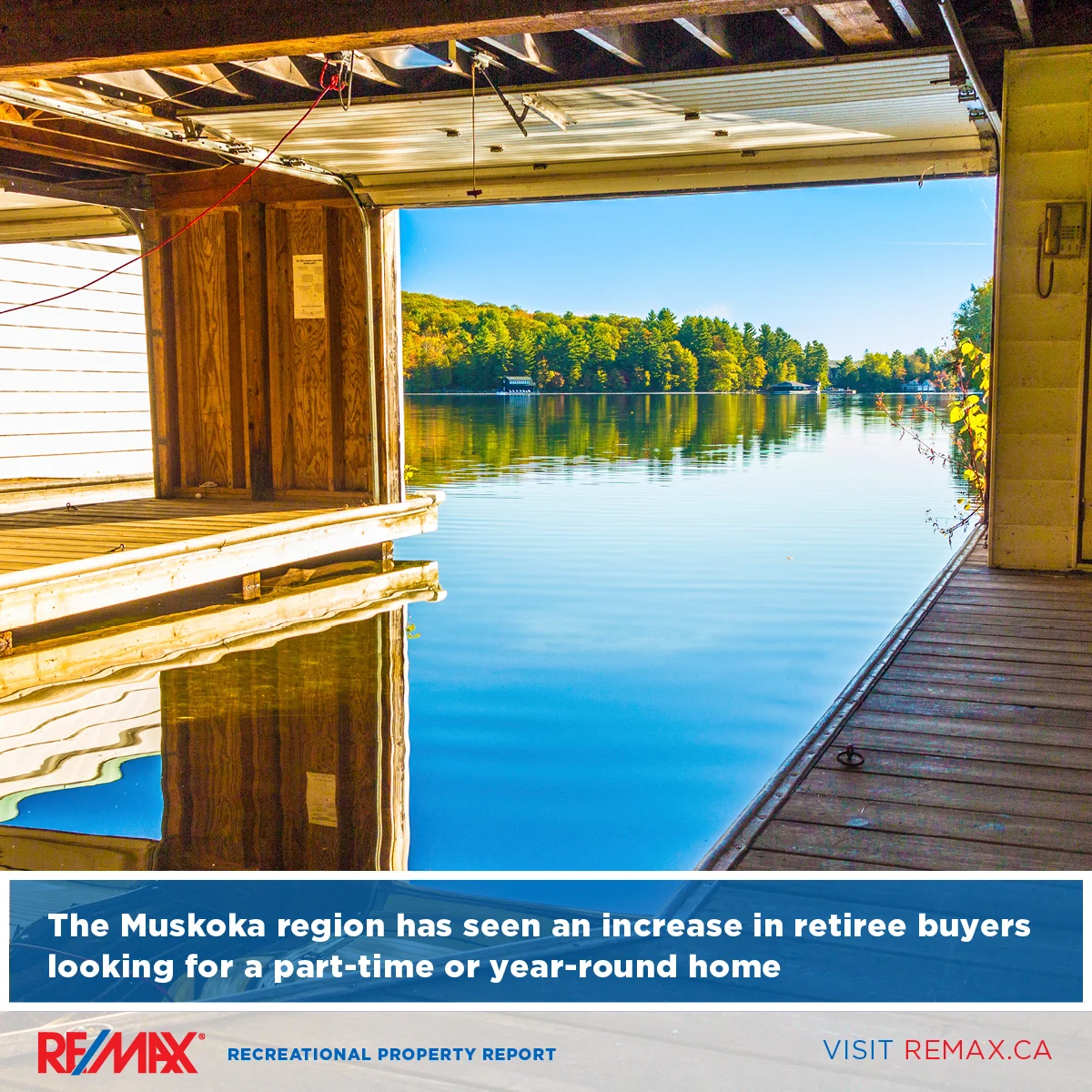
According to the report, 68 per cent of Canadians would rather spend a long weekend at a cottage or cabin over a getaway in the city, and many would give up destination vacations and downsize their main residence in order to purchase a cottage, cabin, or ski chalet.
6 Common Home Pricing Mistakes
If you’re getting ready to sell your home, you want to get the most money for your investment, right? One of the key factors that will sell your home is price, and having a sound pricing strategy is a must if you want to find the right buyer.
Here are six common pricing mistakes all sellers should avoid.
1. Overpricing from the start – You might think your home is the best on the block and should command a price relative to the value you see. Wrong. You have to appeal to the value homebuyers see. Overpricing your home at the onset could leave out strong potential buyers, especially if recent sales and other factors in your neighborhood don’t justify your listing price. You also run the risk of needing multiple price reductions, which keep your home on the market that much longer.
2. Leaving out potential buyers in online searches – Entering a price range is the first search parameter most homebuyers use to narrow down their options. If a buyer’s price range is, say, $250,000 to $300,000, they won’t see your home if it’s listed at $305,000. It might make sense to list it right at $300,000 so that you capture potential buyers in the ranges above and below. Ultimately, this is up to you and your agent, but the range your home's price falls into is certainly worth thinking about – especially if you're teetering between price ranges anyway.
3. Not considering recently sold properties – To arrive at a listing price that will generate buyer interest, you can’t base your price solely on the prices of other homes in your area that are listed for sale. You also need to consider recent sales in your neighborhood and the final sale prices. An experienced agent can provide you with information on recent sales to help you see the bigger picture.
4. Getting too creative with your asking price – Make it easy for buyers and pick round numbers. Listing a home for $512,477, for example, will give potential buyers pause about your intentions and divert attention from your property to you, as the seller. Maybe it's best to save the creative juices for the property description.
5. Not being open to negotiation – The quickest way to kill a sale is to dig in your heels on asking price before the for-sale sign even goes in the yard. Negotiation is a two-way street, and if you refuse to budge on pricing or other conditions, you might be in for very bumpy (and long) ride. Ask yourself: Is it more important to get full asking price, or can you make a few concessions to find common ground that will ensure a closed sale?
6. Ignoring your agent’s insights – The best route to the right price starts with picking a great agent and then listening to his or her advice. Your agent will look at your situation from all angles – your home's features, the local market, recent sales and more – to help you make an informed decision about pricing.
Housing Market Cools in August
Toronto’s housing market went into full summer slowdown in August after an unusually hot July for sales, although prices continued their skyward climb. Transactions were up just 2.8 per cent in August over a year earlier with 7,391 sales of homes and condos across the GTA, according to figures released Thursday by the Toronto Real Estate…
It's time for the Cornell Community Garden Party!
On behalf of the Cornell Community Garden we would like to invite you to the Cornell Community Garden Party - A celebration of growth!
Sunday, June 22nd 2 - 5 p.m.
Join us at the Cornell Community Garden, a community-run food and flower garden supported by the City of Markham.
- Welcome speech by Ward Councillor Colin Campbell
- Activities for children and families
- Silent auction with great prizes from local businesses
- 50-50 draw
- Free cake
Located at: Corner of Almira Ave and Murray Wilson Drive Please walk if possible
Choosing the right Mortgage for you
MORTGAGE TYPES AND RATES
The four main types of mortgages offered by lenders in Canada are closed, open, fixed and variable rate. Many lenders also offer products that combine elements of various mortgage types (i.e. additional payments, blended rates, rate discounts, cash back, etc. See your mortgage broker or lender for details).
A "CLOSED MORTGAGE" keeps payments unchanged for the duration of the loan period. It provides payment stability but there is a penalty for early termination. Terms can be anywhere from six months to twenty years or more, with a five year term being the most common. Interest rates generally rise with the length of the mortgage term.
An "OPEN MORTGAGE" allows the flexibility of prepayment.
A "VARIABLE RATE MORTGAGE" offers the advantage of lower rates if mortgage rates decline. On the other hand, it exposes the borrower to the risk of increased monthly payments if interest rates rise.
A "FIXED RATE MORTGAGE" keeps the mortgage rate the same throughout the term of the mortgage even if rates do go up. If rates do go down, a fixed rate mortgage may prove to be more expensive than a variable rate mortgage.
A "SHORT TERM MORTGAGE" is usually for two years or less. A "LONG TERM MORTGAGE" is generally for three years or more. Short term mortgages are appropriate when someone believes interest rates will drop by renewal time. Long term mortgages are suitable when current rates are reasonable and borrowers want the security of budgeting for the future. This may be particularly important for first time buyers. The key to choosing between short and long term mortgages is to be comfortable with the mortgage payments.
A "CONVENTIONAL MORTGAGE"i s a loan for no more than 80% of the appraised value or purchase price of the property whichever is less. The remaining amount comes from the borrowers own resources and is known as the down payment.
A "HIGH RATIO MORTGAGE" is used when loans exceed conventional mortgage lending guidelines. These mortgages are granted under the National Housing Act (NHA) and must, by law, be insured against default through Canada Mortgage And Housing Corporation (CMHC) or Genworth Financial Canada. The borrower will pay an insurance premium based on their qualifications. Typically, a down payment of at least 5% is required to qualify for this type of mortgage.